What Are Stars? The Complete Guide to the Universe’s Most Fascinating Objects
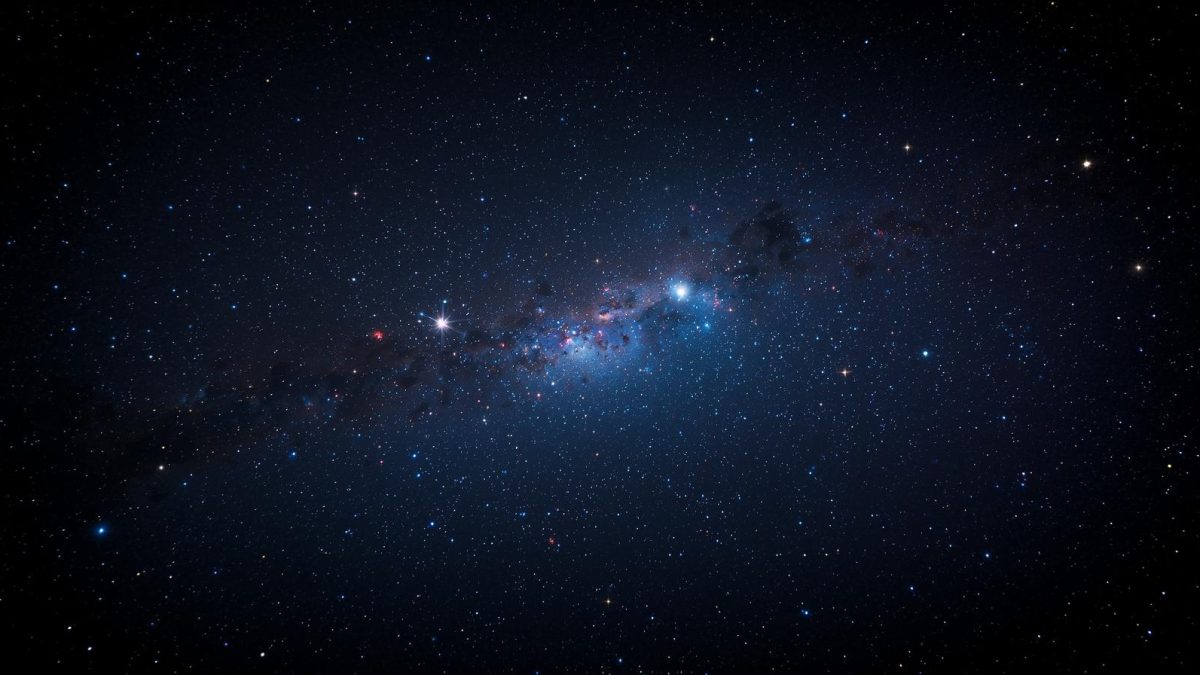
Every clear night, thousands of stars scatter across the sky above you. They look small. They look simple. But they are anything but simple. What is stars?
Stars are the engines of the universe. They forge every heavy element. They power entire solar systems. And believe it or not — every atom of calcium in your bones was forged inside a star that exploded billions of years before Earth even existed.
This guide covers everything you need to know about stars. From how they are born to how they die. From the tiniest red dwarf to the most monstrous hypergiant in the universe.
Furthermore, this article fills gaps you will not find on most astronomy websites — JWST’s latest discoveries, which stars can support life, variable stars, binary systems, and how to actually see different star types with your own eyes tonight.
If you enjoy deep space content like this, you will also love our guide on how black holes are formed — because, as you will soon learn, black holes are simply what the most massive stars leave behind.
What Is a Star? A Clear, Honest Answer
A star is a massive sphere of plasma held together by its own gravity and powered by nuclear fusion in its core.
That sounds technical. So let’s break it down simply.
Plasma is gas heated so intensely that electrons are stripped from their atoms. Therefore, stars are not just balls of gas — they are balls of superheated, electrically charged matter.
Gravity pulls all that material inward. Without it, a star would simply drift apart into space.
Nuclear fusion pushes outward. It releases enormous energy by fusing lighter atoms into heavier ones — primarily hydrogen into helium.
These two forces create a perfect balance called hydrostatic equilibrium. As long as that balance holds, the star keeps shining.
When it breaks, the star dies. But we will get to that shortly.
Quick Fact: Our Sun is a star. It only looks different because it is far closer to us than any other star — about 93 million miles away. The next closest star, Proxima Centauri, is 4.24 light-years away — roughly 25 trillion miles.
What Are Stars Made Of?
Stars are primarily made of two elements: hydrogen and helium. Together, they account for roughly 98% of a star’s total mass.
The breakdown looks roughly like this:
- Hydrogen: approximately 70–75% of total mass
- Helium: approximately 25–28% of total mass
- Trace elements: oxygen, carbon, neon, nitrogen, silicon, iron
Interestingly, those trace elements are the direct products of nuclear fusion. Over billions of years, a star’s core progressively fuses hydrogen into helium, then helium into carbon, carbon into oxygen — all the way up to iron.
Iron is where fusion stops producing energy. Consequently, when a massive star’s core becomes iron, catastrophic collapse follows almost immediately.
Mind-Blowing Fact: Every element heavier than iron — gold, platinum, uranium — was NOT forged in a star’s core. Instead, it was created in the violent explosion of a supernova or in neutron star collisions. The gold in your jewelry literally came from a stellar explosion.
How Do Stars Form? From Dust to Dazzling
Stars do not simply appear out of nowhere. Their formation is a slow, violent, and breathtaking process that unfolds over millions of years.
Step 1 — The Molecular Cloud
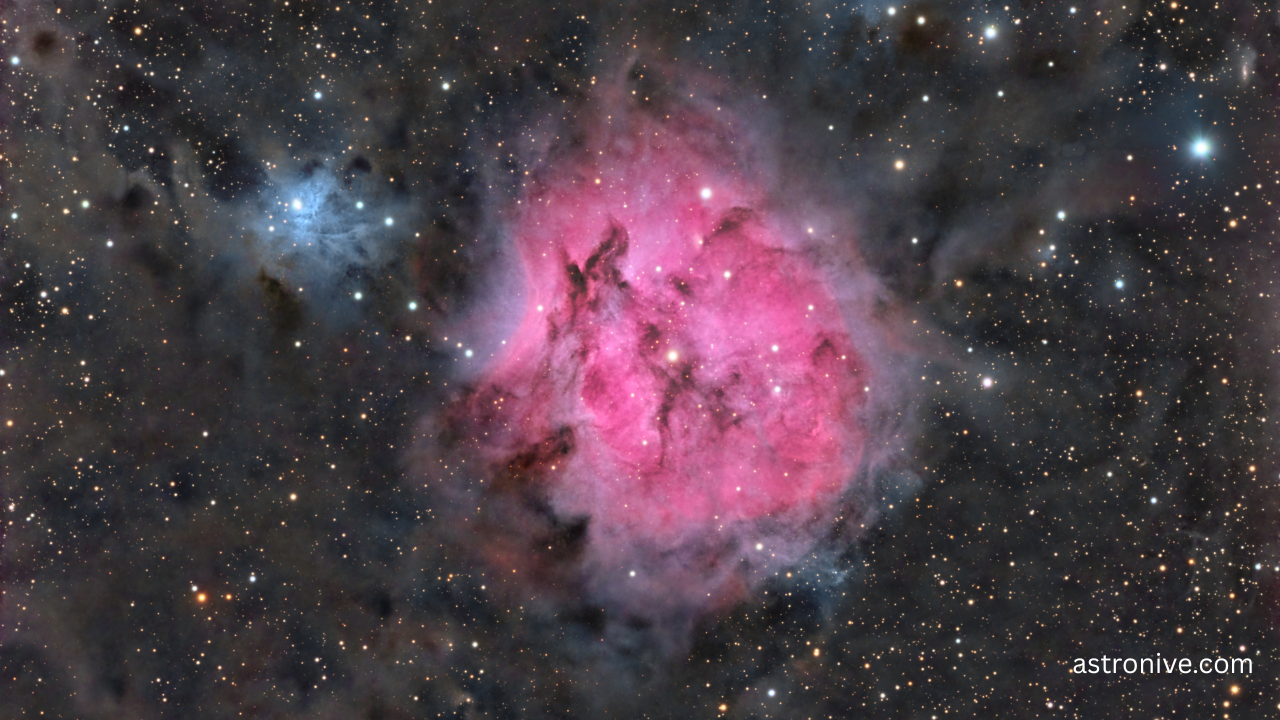
It all starts in a nebula — a vast cloud of gas and dust drifting through a galaxy. Most of this gas is cold hydrogen, slowly spreading through space.
For a very long time, nothing happens. Then something disturbs the cloud — a nearby supernova shockwave, a galaxy collision, or simply the gradual accumulation of gravitational pressure.
Whatever the trigger, the cloud begins to collapse inward on itself.
Step 2 — The Protostar
As the cloud collapses, pockets of denser gas form and start pulling in surrounding material. These pockets heat up rapidly as gravity compresses them tighter and tighter.
Eventually, the core temperature climbs to around 15 million degrees Celsius. At that point, nuclear fusion ignites for the first time.
The object is now a protostar. It is not yet a true star, but it is well on its way. This phase typically lasts about 50 million years for a Sun-like star.
Step 3 — The Main Sequence Star
Once a protostar accumulates enough mass and sustains stable fusion, it graduates to the main sequence — the longest, most stable phase of a star’s life.
Our Sun has been a main sequence star for approximately 4.6 billion years. It will remain one for roughly another 5 billion years.
However, not all main sequence stars are equal. Their mass at birth determines almost everything — their brightness, color, temperature, and how long they live.
Speaking of stellar births — the James Webb Space Telescope has recently revealed stunning images of star-forming regions in unprecedented detail. Check out the latest findings in our Discoveries section.
The 7 Types of Stars Explained (Stellar Classification)
Astronomers classify stars using the Morgan–Keenan (MK) spectral system. It sorts stars by surface temperature into seven main classes — from hottest to coolest.
A simple mnemonic to remember the order: “Oh Be A Fine Guy, Kiss Me” (O, B, A, F, G, K, M).
Here is what each class looks like:
| Class | Color | Surface Temp | Mass vs Sun | Lifespan | Example |
|---|---|---|---|---|---|
| O | Blue | 30,000–50,000 K | 16–150× | 3–10 million years | Zeta Puppis |
| B | Blue-White | 10,000–30,000 K | 2–16× | 30–500 million years | Rigel |
| A | White | 7,500–10,000 K | 1.4–2× | 1–3 billion years | Sirius |
| F | Yellow-White | 6,000–7,500 K | 1–1.4× | 2–5 billion years | Procyon |
| G | Yellow | 5,200–6,000 K | 0.8–1× | 8–12 billion years | Our Sun |
| K | Orange | 3,700–5,200 K | 0.45–0.8× | 15–30 billion years | Epsilon Eridani |
| M | Red | 2,400–3,700 K | 0.08–0.45× | 56–100+ billion years | Proxima Centauri |
There is a striking tradeoff in this table. The hotter and more massive a star, the shorter its lifespan. A massive O-class star burns through all its fuel in just a few million years. Meanwhile, a tiny M-class red dwarf can shine steadily for over 100 billion years — far longer than the current age of the universe.
Red dwarfs are therefore the most common type of star. Roughly 70–75% of all stars in the Milky Way are M-class red dwarfs. Yet because they are so dim, not a single one is visible to the naked eye from Earth.
The Life Cycle of a Star: From Birth to Cosmic Grave
How a star lives — and how it dies — depends almost entirely on one thing: its mass.
Low-Mass Stars (Like Our Sun)
Stars below about 8 solar masses spend billions of years fusing hydrogen into helium on the main sequence. When their hydrogen runs out, they expand dramatically into red giants.
Our Sun will eventually swell into a red giant large enough to engulf Mercury, Venus, and possibly Earth. However, that will not happen for another 5 billion years.
After the red giant phase, the star sheds its outer layers into a beautiful, glowing shell called a planetary nebula. What remains is a white dwarf — a dense, slowly cooling stellar core roughly the size of Earth.
High-Mass Stars (Above 8 Solar Masses)
Massive stars live fast and die violently.
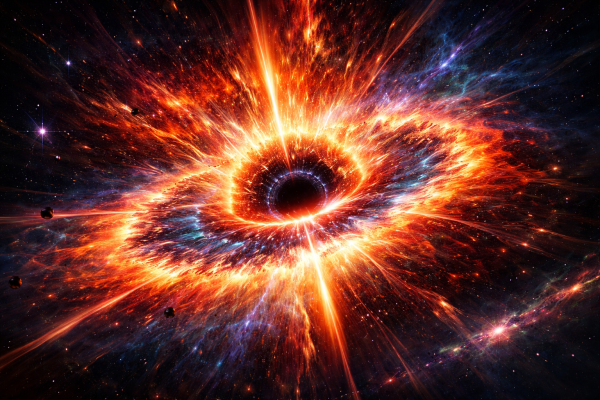
Instead of gently shedding their layers, they explode in a supernova — one of the most energetic events in the entire universe. For a brief moment, a single supernova can outshine an entire galaxy of 100 billion stars combined.
What the supernova leaves behind depends on the original star’s mass:
- Stars of 8–20 solar masses leave a neutron star
- Stars above 20–25 solar masses collapse into a black hole
- Extremely massive stars may collapse directly into black holes without any visible explosion at all
For a deep dive into what happens after stellar collapse, read our detailed guide: How Are Black Holes Formed?
What Stars Leave Behind: Stellar Remnants Compared
When a star dies, it does not simply disappear. It leaves behind one of four extraordinary objects:
| Remnant | Formed From | Density | Key Feature |
|---|---|---|---|
| White Dwarf | 0.8–8 solar mass stars | ~1 ton per teaspoon | Slowly cools over billions of years |
| Neutron Star | 8–20 solar mass stars | ~500 million tons per teaspoon | May spin 700 times per second (pulsar) |
| Magnetar | 8–20 solar mass stars | Similar to neutron star | Strongest magnets in the known universe |
| Black Hole | 20+ solar mass stars | Infinite (singularity) | Nothing escapes — not even light |
Neutron stars that emit powerful radio pulses are called pulsars. Those with extraordinarily strong magnetic fields are called magnetars — the most magnetically powerful objects ever observed in the universe.
For more on these extreme endpoints of stellar death, explore our guide on types of black holes.
5 Famous Stars You Should Know
1. Proxima Centauri — Our Nearest Neighbor
At just 4.24 light-years away, Proxima Centauri is the closest star to our Solar System. It is a tiny M-class red dwarf — so faint that despite being our cosmic neighbor, you cannot see it without a telescope.
Notably, it hosts at least two confirmed exoplanets, including Proxima b, which orbits within its habitable zone. Whether life could survive there is hotly debated due to Proxima Centauri’s intense flaring activity.
2. Betelgeuse — The Dying Giant
Betelgeuse is a red supergiant in Orion, roughly 700 light-years away. It is so enormous that if it replaced our Sun, its surface would extend past the orbit of Jupiter.
Between 2019 and 2020, Betelgeuse dimmed dramatically in what astronomers called the “Great Dimming.” Scientists now believe a massive surface eruption expelled a cloud of material that temporarily obscured the star’s light.
Furthermore, Betelgeuse is expected to explode as a supernova sometime in the next 100,000 years. When it does, it will be visible in broad daylight.
3. Sirius — The Brightest Star in the Night Sky
Sirius in Canis Major is the brightest star visible from Earth at magnitude -1.46. It is actually a binary system — Sirius A (a bright white A-class star) and Sirius B (a white dwarf orbiting it).
Ancient Egyptians tracked Sirius carefully, as its annual reappearance on the eastern horizon coincided precisely with the flooding of the Nile — one of history’s earliest examples of practical astronomy.
4. VY Canis Majoris — One of the Largest Stars Known
VY Canis Majoris is a red hypergiant approximately 1,400 times wider than our Sun. If placed at the center of our Solar System, its surface would extend past the orbit of Saturn.
Despite its incredible size, it is not particularly massive. It is exceptionally bloated — and approaching the final stages of its life.
5. Eta Carinae — The Most Dangerous Star Near Earth
Eta Carinae is a massive binary system about 7,500 light-years away. One component may be the most luminous star in the entire Milky Way — shining roughly 5 million times brighter than our Sun.
It is also wildly unstable. A future hypernova explosion from Eta Carinae would be one of the most spectacular events ever visible from Earth.
Binary and Multiple Star Systems: Stars Are Often Not Alone
Here is something that surprises most people: the majority of Sun-like stars do not travel solo.
More than 50% of Sun-like stars exist in binary or multiple star systems. That means two or more stars orbit their shared center of gravity together.
Binary systems come in several types:
- Visual binaries — two stars clearly separated through a telescope
- Spectroscopic binaries — detected only through Doppler shifts in their light spectrum, not visible separately
- Eclipsing binaries — one star periodically crosses in front of the other, causing predictable dips in brightness
- Contact binaries — stars so close they actually share a common outer atmosphere
Some systems go even further. AR Cassiopeiae is a confirmed septuple star system — seven stars gravitationally bound together.
Moreover, binary systems play a crucial role in stellar evolution. A white dwarf in a binary can gradually pull material from its companion star. If it accumulates enough mass, it explodes as a Type Ia supernova — one of the standard tools astronomers use to measure cosmic distances.
Variable Stars: The Stars That Change Brightness — And Why It Matters
Most stars appear constant from Earth. But some vary in brightness over regular cycles. These are called variable stars, and they are among the most scientifically valuable objects in astronomy.
Cepheid Variables
Cepheid variables pulsate — they physically expand and contract in extremely regular cycles lasting days to months. Crucially, their pulsation period is directly linked to their true luminosity.
Therefore, if you measure how long a Cepheid takes to complete one cycle, you can calculate its true brightness. Compare that to how bright it appears, and you can calculate its exact distance.
This discovery, made by Henrietta Swan Leavitt in 1908, became the foundation of the cosmic distance ladder — the method we still use today to measure distances to galaxies millions of light-years away.
RR Lyrae Stars
These old, low-mass stars pulsate rapidly — typically with periods of less than one day. They are commonly found in globular clusters and serve as reliable distance indicators within our galaxy.
T Tauri Stars
T Tauri stars are young, pre-main sequence objects still contracting under gravity. They vary irregularly and often show signs of vigorous stellar winds and surrounding disks of gas — the birthplaces of future planetary systems.
Mira Variables
Named after the star Mira (“the Wonderful”) in Cetus, these cool pulsating red giants vary dramatically in brightness over periods of 80 to 1,000 days — sometimes by a factor of 1,500 times from their minimum to maximum brightness.
Variable stars are consequently not just curiosities. They are essential measuring tools that helped astronomers map the universe and confirm that it is expanding.
What JWST Is Revealing About Stars Right Now (2025–2026)
Since becoming fully operational in 2022, the James Webb Space Telescope has fundamentally changed stellar astronomy. Its infrared sensitivity allows it to see through the dust clouds that previously hid star-forming regions completely.
Here are some of the most significant recent findings:
Stellar Nurseries in Unprecedented Detail
JWST captured the Carina Nebula’s “Cosmic Cliffs” in stunning resolution, revealing thousands of previously hidden infant stars in various stages of formation. These images confirmed that star formation is far more active — and far more complex — than prior models predicted.
Candidate Population III Stars
One of the most exciting frontiers in astrophysics is the hunt for Population III stars — the very first stars that formed after the Big Bang. These ancient stars contained no elements heavier than helium. None had ever been directly observed.
In 2023 and 2024, JWST detected spectral signatures in distant galaxies that some researchers interpret as evidence of Population III star clusters. While confirmation is still actively debated, this represents potentially the first observational glimpse of the very first generation of stars in the universe.
Detailed Stellar Atmosphere Analysis
JWST’s spectroscopic instruments now allow astronomers to analyze the chemical makeup of stellar atmospheres with extraordinary precision — detecting trace molecules, magnetic patterns, and stellar wind behavior that were previously impossible to study.
Stay updated as these discoveries continue to unfold in our latest space discoveries section.
Which Stars Can Support Life? The Habitability Question
Not all stars are equally capable of nurturing life on their orbiting planets. The type of star you orbit matters enormously.
G-Class Stars — The Familiar Standard
G-class stars like our Sun are considered the classic benchmark for habitability. They are stable, long-lived (8–12 billion years), and emit light across a broad spectrum that supports photosynthesis. Their habitable zones are at comfortable orbital distances.
K-Class Stars — The Sleeper Candidates
Many astrobiologists now argue that K-class orange dwarfs may actually be better candidates for life than our own Sun.
They live two to three times longer (giving evolution more time to work), they are more stable with lower UV and X-ray output, and their habitable zones are well-defined. Stars like Epsilon Eridani and Tau Ceti fall into this promising category.
M-Class Red Dwarfs — Common but Challenging
M-dwarfs host the most known exoplanets simply because they are by far the most common type of star. However, planets in their habitable zones must orbit extremely close — close enough that powerful stellar flares can repeatedly sterilize the surface.
Additionally, these planets are often tidally locked, meaning one side permanently faces the star while the other side sits in permanent frozen darkness. Whether life could adapt to such extreme conditions is one of astronomy’s most actively researched questions today.
O and B Stars — Almost Certainly Lifeless
Massive O and B stars burn through their fuel in just a few million years. Life on Earth took roughly 3.8 billion years to achieve even basic multicellular complexity. Therefore, O and B stars almost certainly cannot provide enough time for life to take hold.
How Astronomers Study Stars Without Visiting Them
Stars are too far away to visit. So how do astronomers know so much about them? The answer is almost entirely in the light they emit.
Spectroscopy — Reading a Star’s Fingerprint
When starlight passes through a prism or diffraction grating, it spreads into a spectrum of colors. Embedded in that spectrum are dark absorption lines — specific wavelengths where elements in the star’s atmosphere have absorbed light.
Each element absorbs at unique wavelengths, like a fingerprint. Consequently, by analyzing these lines, astronomers can determine a star’s chemical composition, temperature, density, magnetic field strength, and even its velocity toward or away from Earth.
The Hertzsprung-Russell Diagram
The H-R diagram is the most important single tool in stellar astrophysics. It plots stars by their luminosity against their surface temperature.
When you plot thousands of stars, a remarkable pattern emerges. Most stars cluster along a diagonal band called the main sequence. Red giants appear in the upper right. White dwarfs sit in the lower left.
This diagram therefore allows astronomers to classify any star and predict its evolutionary stage from just two observable measurements.
Parallax and the Gaia Mission
For nearby stars, astronomers use parallax — the apparent shift in a star’s position as Earth moves around the Sun. The greater the shift, the closer the star.
The European Space Agency’s Gaia telescope has used this method to precisely map the positions and distances of over 1.8 billion stars in the Milky Way — creating the most detailed stellar census in history.
Stargazing Guide: How to See Different Star Types Tonight
You do not need a telescope to start exploring stars. Your naked eye reveals far more than most people realize.
Reading Star Colors
The color of a star directly tells you its surface temperature:
- Blue or blue-white (Rigel, Spica) — extremely hot, over 10,000 K
- White (Sirius, Vega) — hot, around 7,500–10,000 K
- Yellow-white to yellow (Capella, Pollux) — medium temperature, 5,200–7,500 K
- Orange (Arcturus, Aldebaran) — cooler, around 3,700–5,200 K
- Red (Betelgeuse, Antares) — coolest visible surface temperatures, under 3,700 K
5 Best Stars for Naked-Eye Observers
- Sirius (winter) — the brightest star in the entire night sky, slightly south of Orion in Canis Major
- Betelgeuse (winter/spring) — the distinctly reddish shoulder of Orion; compare it visually to nearby blue Rigel
- Arcturus (spring/summer) — brilliant orange giant in Boötes; find it by following the arc of the Big Dipper’s handle
- Vega (summer) — part of the Summer Triangle, nearly overhead on summer evenings in the Northern Hemisphere
- Capella (autumn/winter) — a bright yellow-white giant in Auriga, almost circumpolar from northern latitudes
First Telescope Target: The Orion Nebula
The Orion Nebula (M42) is visible as a faint smudge below Orion’s belt with the naked eye. Through even a modest pair of binoculars, it transforms into a stunning glowing cloud where new stars are being born right now — a real, live stellar nursery.
For upcoming sky events and the best observation windows each month, check our astronomy blog for regularly updated guides.
Frequently Asked Questions About Stars
Q1. How many stars are in the universe?
Scientists estimate there are approximately 200–400 billion stars in the Milky Way alone. Multiply that across the estimated 2 trillion galaxies in the observable universe, and the total exceeds 10²⁴ stars. In practical terms, there are more stars in the universe than grains of sand on all of Earth’s beaches combined.
Q2. What is the closest star to Earth?
The closest star to Earth is Proxima Centauri, at 4.24 light-years away. At the speed of the fastest spacecraft ever built, it would still take approximately 6,300 years to reach it.
Q3. How hot is a star?
It depends entirely on the type. M-class red dwarfs have surface temperatures of 2,400–3,700 K. Our Sun’s surface sits at about 5,778 K. The hottest O-class stars reach 50,000 K or more at the surface. Core temperatures are far higher — our Sun’s core burns at approximately 15 million K.
Q4. How long do stars live?
Stellar lifespan is inversely related to mass. Massive O-class stars burn out in as few as 3 million years. Our Sun has a total lifespan of about 10 billion years. Small M-class red dwarfs can theoretically live for over 100 billion years — more than seven times the current age of the universe.
Q5. What happens when a star dies?
It depends on the star’s mass. Low-mass stars expand into red giants, shed their outer layers as planetary nebulae, and leave white dwarfs. Massive stars explode as supernovae, leaving neutron stars. The most massive stars collapse into black holes. In all cases, the ejected material enriches the surrounding galaxy with heavy elements — eventually seeding new stars and planets.
Q6. Why do stars twinkle?
Stars twinkle because of atmospheric turbulence. Pockets of air at different temperatures bend starlight slightly as it passes through Earth’s atmosphere, and this bending shifts rapidly, making the star appear to flicker. Planets show a visible disk rather than a point, which averages out the effect — that is why planets look steadier than stars.
Q7. What is a shooting star?
A “shooting star” is not a star at all. It is a meteoroid — a fragment of rock or metal from space — burning up as it enters Earth’s atmosphere at high speed. The streak of light is caused by atmospheric friction. True stars are millions of times larger and vastly farther away.
Q8. How do scientists know what stars are made of without visiting them?
Through spectroscopy. When starlight is split into its component wavelengths, each element in the star’s atmosphere leaves a unique pattern of dark absorption lines — essentially a chemical fingerprint. By analyzing these patterns, astronomers can determine composition, temperature, density, magnetic field, and velocity with remarkable precision, all from billions of miles away.
Q9. Can a star be smaller than a planet?
Almost — but not quite. The smallest true stars (low-mass M-dwarfs at the bottom of the main sequence) are only slightly larger than Jupiter. Objects below roughly 80 Jupiter masses cannot sustain nuclear fusion and are called brown dwarfs — often described as “failed stars.” They are larger than planets but not quite stars.
Q10. Are there stars older than the universe?
The universe is approximately 13.8 billion years old, and no confirmed star has been found that is definitively older. However, a star nicknamed the “Methuselah Star” (HD 140283) was initially measured at a controversial 14.5 billion years. More precise measurements placed it at approximately 13.7 billion years — just within the universe’s age, with enough measurement uncertainty to make it one of the most fascinating ongoing debates in astrophysics.

Conclusion: Stars Are the Universe’s Greatest Story
Stars are not just lights in the night sky. They are the universe’s factories, its engines, its graveyards, and its nurseries — often all at the same time.
They forge the atoms that make up your body. They power the solar systems that give rise to planets. When they die, they scatter the raw material of the next generation of worlds across entire galaxies.
Furthermore, understanding stars means understanding almost everything else in astronomy. Black holes, exoplanets, the expanding universe, the origin of life — all of it traces back, in some way, to stellar physics.
References
- NASA Science — Stars:
- Britannica — Star (Astronomy):
- Space.com — Stars: Facts About Stellar Formation:
- AMNH — The Universe: Stars:

jafir
Jafir Abbas is the visionary founder and owner of Astronive.com, a leading online hub for astronomy enthusiasts, space exploration insights, and cosmic discoveries. With a passion for the mysteries of the universe, Jafir has dedicated his work to making complex astronomical concepts accessible and engaging for readers of all ages. Under his guidance, Astronive.com has become a trusted resource for space news, celestial events, and educational content that inspires curiosity about the cosmos. Jafir combines a keen interest in science with a commitment to clear, engaging communication, bringing the wonders of the universe closer to everyone.
View all posts