How Does a Star Form? A Complete Step-by-Step Guide
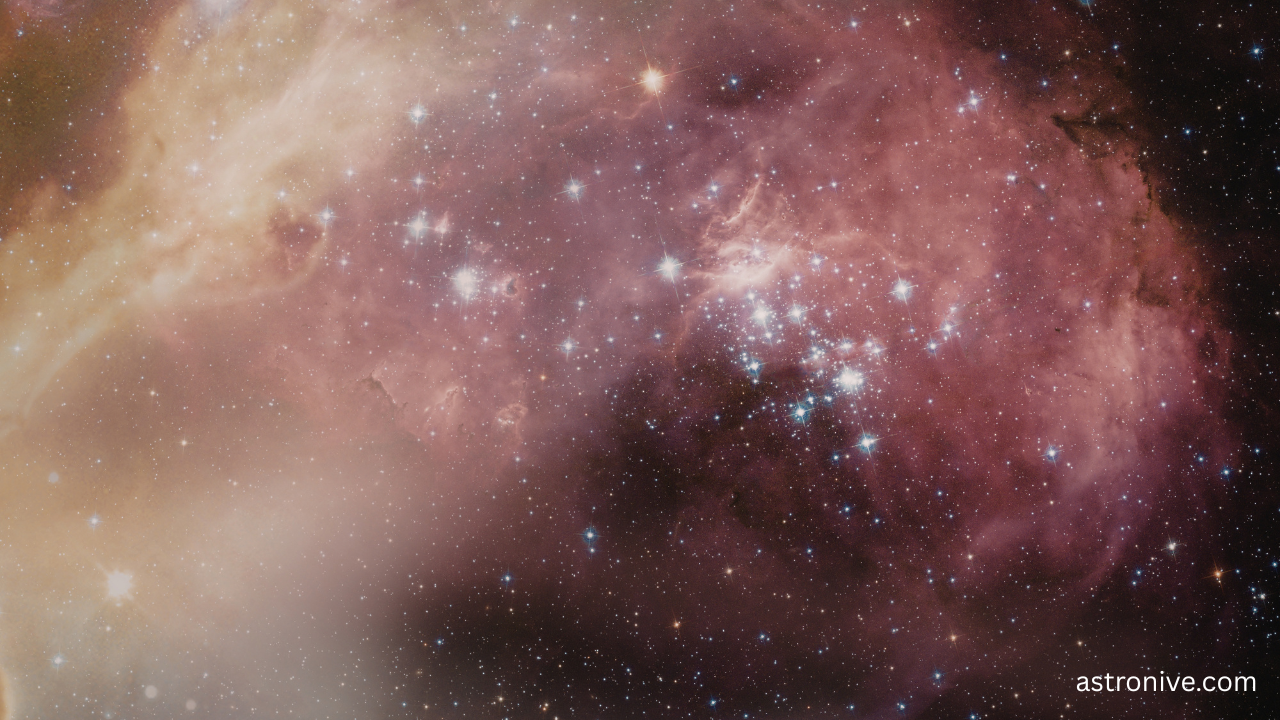
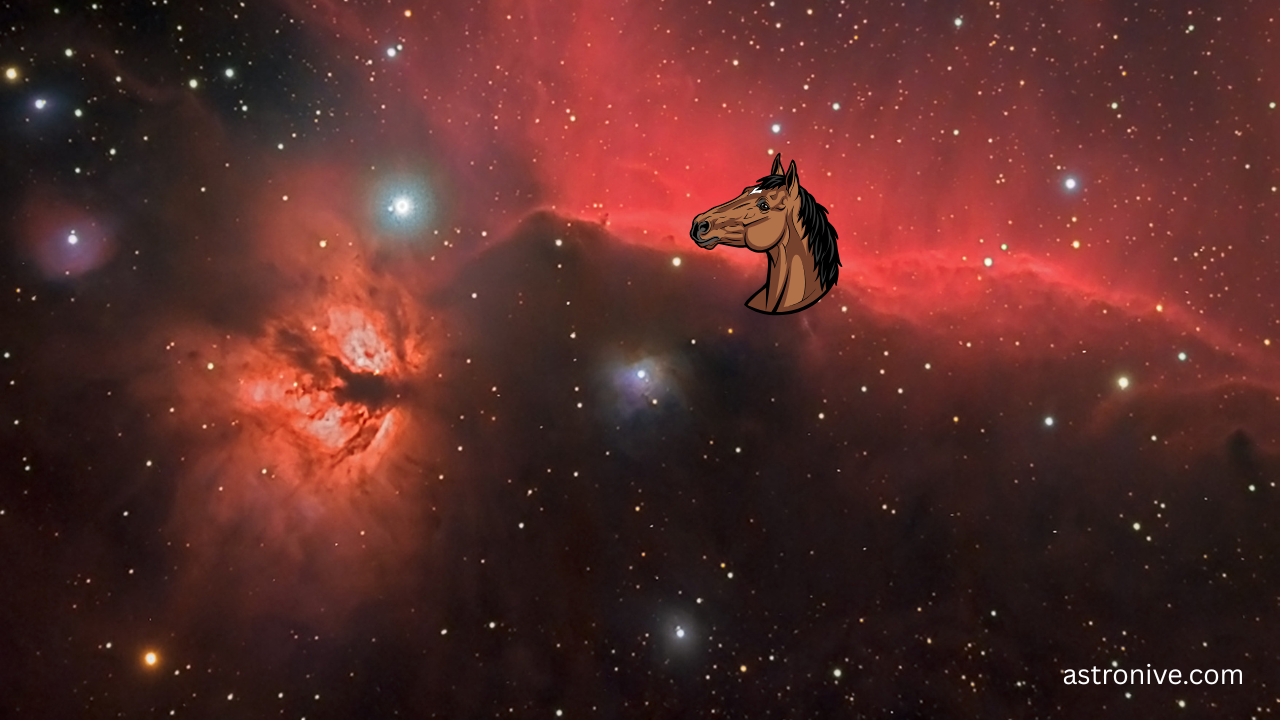
star formation is one of the most important processes in the universe. Every star you see in the night sky — including our Sun — was born from a cold cloud of gas and dust. First, gravity slowly pulled that material together. Then heat and pressure built up inside. Finally, nuclear fusion ignited, and a new star began to shine. In this guide, we walk you through that process in eight clear steps. We also cover the latest discoveries from the James Webb Space Telescope, which has changed much of what we knew about how stars are born.

Why Does Star Formation Matter?
Stars are the engines of the universe. For example, they build chemical elements, power planets, and create conditions for life. Without star formation, therefore, the universe would be cold, dark, and empty. Understanding how stars form helps us understand where we came from.
A Quick Overview: The 8 Stages of Star Formation
Here is the full journey at a glance:
- A giant molecular cloud drifts through space, cold and stable
- Something disturbs the cloud — gravity begins to win
- The cloud collapses and splits into dense clumps
- A protostar forms at the center of each clump
- An accretion disk and powerful jets grow around the protostar
- The young star enters the T Tauri phase — visible but not yet fusing hydrogen
- Core temperature rises until nuclear fusion ignites
- The star settles onto the main sequence and begins its long, stable life
Now let’s explore each stage in detail.
Stage 1 — The Molecular Cloud: A Stellar Nursery in Waiting
Star formation begins in a giant molecular cloud (GMC). These are very large regions of gas and dust. In particular, they float through the spiral arms of galaxies. Most of the gas is molecular hydrogen (H₂). In addition, smaller amounts of helium, carbon monoxide, and other molecules are also present.
How Big Are Molecular Clouds?
Giant molecular clouds are enormous. For instance, they can stretch hundreds of light-years across. Many contain enough material to build tens of thousands of stars. Well-known examples include the Orion Molecular Cloud and the Tarantula Nebula.
Why Are They So Cold?
Dust inside the cloud blocks starlight from entering. As a result, the interior stays very cold — just 10 to 30 Kelvin (about −260°C). At these temperatures, gas moves very slowly. Consequently, a cloud can stay stable for tens of millions of years.
What Keeps the Cloud Stable?
Two forces stay in balance inside a stable cloud. On one hand, gravity pulls every particle inward. On the other hand, gas pressure pushes outward. As long as both forces are equal, the cloud simply drifts through space. Nothing happens.
What Triggers Collapse?
Something must break that balance. Common triggers include:
- A nearby supernova sending a shockwave through the cloud
- Two molecular clouds colliding with each other
- Compression as the cloud passes through a galaxy’s spiral arm
- Radiation pressure from nearby massive stars
Once a region becomes dense enough, gravity beats gas pressure. This tipping point is described by the Jeans criterion. After that, collapse is unstoppable and star formation begins.
Key Concept — The Jeans Criterion: Named after British physicist Sir James Jeans, this gives the minimum mass at which a cloud will collapse under gravity. Cold, dense clouds have a lower threshold. That is why the coldest, densest parts of molecular clouds are always the first places where new stars appear.
Stage 2 — Gravitational Collapse and Fragmentation
Once a cloud region crosses the Jeans threshold, gravity takes full control. As a result, the clump begins to pull inward — slowly at first, then faster. This is called gravitational collapse. It is, in fact, the core engine of star formation.
The Cloud Starts to Spin
As the cloud collapses, it spins faster. Even a tiny rotation in the original cloud gets amplified as it shrinks. For example, think of a figure skater pulling in their arms — they speed up without any extra effort. This effect is called conservation of angular momentum. Moreover, that spin becomes very important in later stages.
Why Does the Cloud Fragment?
A collapsing cloud does not fall inward as one smooth ball. Instead, different regions have slightly different densities. Denser patches collapse faster than the rest. The result is fragmentation — the cloud breaks apart into dozens or hundreds of smaller clumps. Each one then collapses on its own and forms a separate star.
Stars Are Born in Families
Because of fragmentation, stars rarely form alone. Instead, most are born in clusters — whole families from the same parent cloud. For instance, our Sun probably formed in a group of thousands of siblings. Over billions of years, however, those siblings drifted apart across the Milky Way. Today they are unrecognizable as family.
Stage 3 — The Protostar Forms
Heating Up Inside
As each collapsing fragment shrinks, gas at its center heats up. Early on, heat escapes into space easily. As a result, the temperature stays low and the collapse moves quickly.
Over time, however, the core gets denser. Heat can no longer escape. Therefore, temperature rises fast. At around 2,000 Kelvin, molecular hydrogen breaks apart into single atoms. This absorbs energy and speeds up the collapse even further. This brief, dramatic event is called the second collapse.
What Is a Protostar?
The result is a protostar — a dense, hot, glowing ball of gas. No nuclear fusion is happening yet. Instead, the glow comes from gravitational energy turning into heat and light. Gas keeps falling onto it and adding to its mass.
This phase is called Kelvin-Helmholtz contraction, named after the 19th-century physicists who first described it.
How Do Astronomers Classify Protostars?
Astronomers group protostars into four classes. Specifically, the classification is based on how much dust surrounds them and how much infrared light they give off.
| Class | Description | What We Can See |
|---|---|---|
| Class 0 | Youngest protostars. Buried deep in dust. | Only radio and far-infrared |
| Class I | Growing protostar, clearing some dust | Near-infrared detectable |
| Class II | Young star with a disk of gas and dust | Visible light, disk clearly present |
| Class III | Disk nearly gone, nearing main sequence | Visible light, disk mostly dispersed |
Low-mass protostars can stay in this phase for several million years. High-mass protostars race through it in just a few thousand years.
Stage 4 — The Accretion Disk and Bipolar Jets
Why a Disk Forms
Not all the collapsing gas falls straight onto the protostar. Some has too much spin to fall directly inward. Instead, it settles into a flat, rotating ring around the protostar. This ring is called a circumstellar accretion disk. Gas and dust then spiral slowly inward through this disk and land on the growing protostar. This feeding process is called accretion.
Planets Are Born Here Too
Accretion disks are not just food for the protostar. In addition, they are also where planets are built. Dust grains in the disk collide and stick together. Over time, they grow into boulders, then planetesimals, then full planets. For example, the Earth formed this way — 4.6 billion years ago, inside the disk of the young Sun.
What Are Bipolar Jets?
Young protostars also shoot powerful beams of gas from their poles. These are called bipolar jets. They travel at hundreds of kilometers per second and can reach light-years away from the protostar. Furthermore, when these jets hit the surrounding gas, they create bright glowing patches called Herbig-Haro objects. These are visible even with amateur telescopes.
Why Jets Are Essential
Jets remove excess spin from the protostar system. Without them, the protostar would spin so fast that it would tear apart. In other words, jets act as a release valve — they allow accretion to continue safely.
Webb Discovery: In 2023, the James Webb Space Telescope captured the clearest images ever taken of Herbig-Haro 46/47 — a jet system about 1,470 light-years away. Webb’s infrared view revealed knots and shock waves inside the jets that Hubble could not detect. These confirmed jet formation details that scientists had only predicted in theory.
Stage 5 — The T Tauri Phase: A Star in Adolescence
A Visible but Turbulent Young Star
As the protostar clears its dust shell, it enters the T Tauri phase. Named after the star T Tauri in the constellation Taurus, these young stars are now visible in ordinary light. However, they are still not fusing hydrogen. Light still comes from gravitational contraction. In addition, the accretion disk is still present, though thinner than before.
What Makes T Tauri Stars Unusual?
Compared to our Sun, T Tauri stars are wild and unpredictable. Key features include:
- Strong, complex magnetic fields
- Intense ultraviolet and X-ray flares
- Rapidly changing brightness as material falls unevenly onto the surface
- Powerful stellar winds that erode the disk from the inside out
Moving Across the H-R Diagram
On the Hertzsprung-Russell (H-R) diagram, T Tauri stars sit above the main sequence. As they contract and heat up, they gradually move toward it. Specifically, they follow two paths: the Hayashi track (a vertical drop while the star is fully convective) and the Henyey track (a leftward move once an inner radiative zone forms).
How Long Does This Phase Last?
For a solar-mass star, the T Tauri phase lasts 10 to 100 million years. In contrast, massive stars rush through it in under a million years. Very low-mass red dwarf stars, on the other hand, may stay in this phase for over a billion years.
The Disk Disappears — Planets Must Hurry
The young star’s radiation slowly destroys the disk. This process is called photoevaporation. Once the disk is gone, planet formation stops. As a result, disks typically last only 1 to 10 million years. That is the only window in which planets can form.
Stage 6 — Nuclear Ignition: The Birth of a True Star
What Is Nuclear Fusion?
Nuclear fusion occurs when two atomic nuclei combine to form a heavier one. In a star’s core, for instance, hydrogen nuclei fuse to form helium. This process releases a huge amount of energy. Specifically, the reaction follows Einstein’s equation E = mc². In Sun-like stars, this reaction is called the proton-proton chain.
What Conditions Are Needed?
Fusion needs extreme heat and pressure. First, the core must reach at least 10 million Kelvin. Second, pressure must be high enough to push positively charged protons close together. Only then can the strong nuclear force bind them.
As the protostar contracts, its core temperature keeps rising. When fusion finally ignites, the released energy pushes outward. As a result, this balances gravity’s inward pull and the star stops contracting. This stable state is called hydrostatic equilibrium.
Joining the Main Sequence
Once a star reaches hydrostatic equilibrium, it joins the Zero Age Main Sequence (ZAMS). From this point, it fuses hydrogen at a steady rate. For example, a solar-mass star stays on the main sequence for about 10 billion years. Our Sun is roughly 4.6 billion years into that journey.
Stage 7 — High-Mass Stars: A Different Path
How Their Formation Differs
Stars more than eight times the Sun’s mass form much faster. In fact, their protostellar phase is measured in thousands of years, not millions. They reach fusion while still buried inside their birth cloud. Their intense ultraviolet radiation then ionizes the surrounding gas. As a result, this creates a glowing region called an HII region. The Orion Nebula is one of the most famous examples.
Carving Out the Neighbourhood
Massive stars drive powerful stellar winds. These winds hollow out large cavities in the surrounding cloud. Sometimes, this squeezes nearby gas past the Jeans threshold. Consequently, a new round of star formation then begins. This is called triggered star formation.
Short Lives, Violent Deaths
The more massive a star, the faster it burns its fuel. For example, a star 25 times the Sun’s mass lives only about 7 million years. When hydrogen runs out, it explodes as a supernova. In doing so, this blast scatters heavy elements — including the carbon, oxygen, and iron found in your body — across the galaxy.
The Initial Mass Function
Not all star masses form in equal numbers. The Initial Mass Function (IMF), first described by Edwin Salpeter in 1955, shows that low-mass stars form far more often than high-mass ones. In other words, for every massive star born, hundreds of smaller stars appear. The smallest stars — red dwarfs — may therefore live for trillions of years.
Stage 8 — What the James Webb Telescope Has Revealed
A New Kind of Vision
The James Webb Space Telescope (JWST) launched in December 2021. Its biggest strength is sensitivity to infrared light. Specifically, infrared passes through the dust clouds that block visible light. As a result, Webb can see protostars and disks that were completely hidden from Hubble.
The Tarantula Nebula Up Close
In 2022, Webb imaged the Tarantula Nebula in the Large Magellanic Cloud. This is the most active star-forming region near our galaxy. Notably, Webb showed thousands of young stars still inside their dust cocoons. Fine details of jets, shocks, and dust pillars appeared for the first time.
Our Nearest Stellar Nursery
Webb also captured the Rho Ophiuchi cloud complex — just 390 light-years from Earth. Dozens of young protostars appeared in the image, some still buried in dense dust. Furthermore, no telescope has ever shown us the earliest moments of star formation this clearly.
Planet-Forming Disks Under Threat
In the Orion Nebula, Webb imaged dozens of protoplanetary disks in sharp detail. Radiation from nearby massive stars erodes the disks of neighboring low-mass protostars. Consequently, this sets a hard deadline on how long those planets have to form.
Searching for the First Stars
One of Webb’s key goals is finding Population III stars — the very first stars ever born. These formed from pure hydrogen and helium shortly after the Big Bang. So far, Webb has not yet seen one directly. However, very early galaxies already hint at their presence through their light signatures. Research is ongoing.
Rewriting Our Timeline
Webb has found mature, star-rich galaxies far earlier in the universe’s history than expected. Some formed when the universe was under 500 million years old. This suggests, therefore, that early star formation was faster and more efficient than our models predicted. As a result, scientists are actively revising those models now.
How Long Does Star Formation Take?
The timescale varies greatly depending on the star’s mass. Here is a rough timeline for a solar-mass star:
| Phase | Duration |
|---|---|
| Stable molecular cloud (before collapse) | Tens of millions of years |
| Gravitational collapse and fragmentation | ~100,000 years |
| Class 0 protostar | ~10,000 – 100,000 years |
| Class I protostar | ~100,000 – 500,000 years |
| T Tauri star (Class II/III) | ~1 – 100 million years |
| Arrival on the main sequence | ~50 million years after collapse |
| Main sequence lifetime | ~10 billion years |
A star 25 times the Sun’s mass can complete the whole journey in under 1 million years.
Frequently Asked Questions
About Time and Process
How long does it take for a star to form? For a Sun-like star, the process takes roughly 10 to 50 million years. Massive stars can form in under 1 million years. Very low-mass red dwarf stars, however, may take hundreds of millions of years.
What is the difference between a protostar and a star? A protostar glows from gravitational contraction. No nuclear fusion is happening yet. In contrast, a true star sustains hydrogen fusion in its core. When fusion starts and the star reaches balance, it therefore becomes a main-sequence star.
About Stellar Nurseries and Clusters
What is a stellar nursery? A stellar nursery is a region of a molecular cloud where new stars are actively forming. Famous examples include the Orion Nebula, the Eagle Nebula, the Carina Nebula, and the Tarantula Nebula.
Why do stars form in clusters? Molecular clouds are much larger than any single star. When a cloud collapses, it breaks into many smaller clumps. Each clump then forms its own star. As a result, these stars are born close together and often stay in loose groups for hundreds of millions of years.
About Planets and Brown Dwarfs
Can planets form while a star is still being born? Yes. Planet formation starts in the disk during the protostellar phase. Dust grains collide and slowly grow into planets. The disk usually disappears within 1 to 10 million years, however, ending the planet-building window.
What is the smallest object that can become a star? A star needs at least 0.08 solar masses — about 80 times Jupiter’s mass — to reach the temperature for hydrogen fusion. Objects below this limit are called brown dwarfs. In short, they form like stars but never fully ignite.
About Webb and Hubble
How is Webb different from Hubble for studying star formation? Hubble works mainly in visible and near-infrared light. Dust blocks these wavelengths in star-forming regions. Webb, on the other hand, works at longer infrared wavelengths that pass through dust. This consequently lets Webb see directly inside stellar nurseries that were previously invisible.
Key Terms and Glossary
Core Processes
Gravitational collapse — When gravity overwhelms gas pressure in a cloud and the cloud falls inward.
Fragmentation — When a collapsing cloud breaks into many smaller clumps, each of which forms a separate star.
Accretion — The process by which a protostar gains mass as gas and dust spiral inward from its disk.
Nuclear fusion — The process by which two atomic nuclei combine to release energy. In stars, hydrogen fuses into helium.
Hydrostatic equilibrium — The balance between gravity pulling inward and gas pressure pushing outward. This keeps a star stable.
Photoevaporation — The gradual destruction of a protoplanetary disk by radiation from the young star or nearby massive stars.
Key Objects
Giant molecular cloud (GMC) — A very large cloud of gas and dust, mostly molecular hydrogen. The birthplace of stars.
Protostar — A glowing ball of collapsing gas that has not yet begun nuclear fusion. The stage before a true star.
Accretion disk — A flat, rotating disk of gas and dust around a protostar. It feeds material onto the star and is where planets form.
Bipolar jets — Beams of gas shot from the poles of a protostar at high speed. They carry away spin and allow accretion to continue.
Herbig-Haro objects — Glowing patches of gas created when protostellar jets hit surrounding interstellar material.
HII region — A cloud of ionized hydrogen gas around a hot, young, massive star. The Orion Nebula is one example.
Brown dwarf — An object that forms like a star but is too small to sustain hydrogen fusion. Less than 0.08 solar masses.
Population III stars — The predicted first generation of stars in the universe. Formed from pure hydrogen and helium. Not yet directly observed.
Classification Systems
Class 0, I, II, III protostars — Four stages of young stellar objects, classified by how much dust surrounds them and how bright they are in infrared light.
Main sequence — The band on the H-R diagram where stable stars spend most of their lives fusing hydrogen into helium.
Zero Age Main Sequence (ZAMS) — The point at which a star first achieves stable hydrogen fusion and joins the main sequence.
Initial Mass Function (IMF) — A description of how many stars of each mass form in a given region. Low-mass stars form far more often.
Diagrams and Tracks
Hertzsprung-Russell (H-R) diagram — A chart that maps stars by brightness and temperature. Different types of stars sit in different regions.
Hayashi track — The path a fully convective young star takes on the H-R diagram as it contracts toward the main sequence.
T Tauri star — A young star that has not yet begun hydrogen fusion. Active, magnetically intense, and still contracting.
Physics Concepts
Jeans criterion / Jeans mass — The minimum mass at which a cloud will collapse under its own gravity.
Molecular hydrogen (H₂) — The most common molecule in molecular clouds. Two hydrogen atoms bonded together.
Proton-proton chain — The nuclear reaction that fuses four hydrogen nuclei into one helium nucleus. The main energy source in Sun-like stars.
Triggered star formation — Star formation set off by an outside event — like a supernova shockwave — compressing gas past the Jeans threshold.
Sources and Further Reading

jafir
Jafir Abbas is the visionary founder and owner of Astronive.com, a leading online hub for astronomy enthusiasts, space exploration insights, and cosmic discoveries. With a passion for the mysteries of the universe, Jafir has dedicated his work to making complex astronomical concepts accessible and engaging for readers of all ages. Under his guidance, Astronive.com has become a trusted resource for space news, celestial events, and educational content that inspires curiosity about the cosmos. Jafir combines a keen interest in science with a commitment to clear, engaging communication, bringing the wonders of the universe closer to everyone.
View all posts