

Mars Meteorite: The Incredible Story of Rocks That Traveled Millions of Miles to Reach Earth
Imagine Holding a Piece of Another Planet Right in Your Hands
Close your eyes for a second. Picture this — you are holding a Mars meteorite in your palm. Nothing fancy. A little grey. A little rough. But this is not just any rock. Mars forged this rock over a billion years ago. It survived a violent asteroid impact. It flew through cold, dark space for millions of years. And somehow — against all odds — it landed on Earth, right where someone could find it.
That feeling? That is exactly what a Mars meteorite gives you.
You don’t need to be a scientist to feel something stir inside you when you think about it. A piece of another world, right here on ours. That is not science fiction. That is real. And it is happening right now — scientists have already confirmed more than 277 of these Martian rocks on Earth.
So let’s talk about them. What they are, how they got here, what they tell us, and why they might just change everything we think we know about life in the universe.
What Exactly Is a Mars Meteorite?
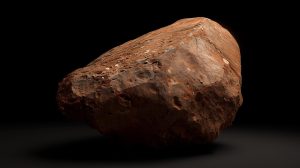
A Mars meteorite is a rock that was born on Mars, got blasted off the planet by a massive asteroid or comet impact, floated through space, and eventually crashed onto Earth.
Think about how wild that is. Something slammed into Mars with so much force that it knocked a chunk of the Martian surface completely off the planet. That chunk then drifted through the solar system — sometimes for millions of years — before gravity pulled it toward Earth.
These are not just ordinary space rocks. These are literal pieces of the Martian crust. They carry chemical fingerprints, gas signatures, and minerals that only come from Mars. In many ways, they are the closest thing we have to bringing Mars to us — before any human has ever set foot on it.
As of now, scientists have officially confirmed fewer than 300. That is less than half a percent of all meteorites ever classified. In other words, Mars meteorites are incredibly rare.
How Did a Rock From Mars End Up on Earth?
This is where the story gets truly dramatic.
Long ago — and even more recently than you might think — a large asteroid or comet smashed into the surface of Mars. The impact launched pieces of Martian rock at high speed, fast enough to escape Mars’s gravity entirely.
Here is something important to understand. Mars has much weaker gravity than Earth — only about 38% as strong. Its atmosphere is also roughly 125 times thinner. Because of this, it is actually easier to eject a rock from Mars than it would be from Earth. A powerful enough impact can send rocks flying into space without burning them up.
Once those rocks broke free from Mars, they entered orbit around the Sun. For anywhere between 1 million and 15 million years, they drifted. Then, eventually, Earth’s gravity pulled some of them in. They entered our atmosphere at extreme speed, the outer layer burned off — forming what is called a “fusion crust” — and they landed on Earth.
Most end up in oceans. Some sink into forests and jungles. But the ones scientists have found? Many came from deserts and Antarctica — places where rocks stand out and survive for thousands of years without breaking down.
To understand more about the ancient history locked inside Mars rocks and the surface they came from, check out our deep dive on Mars Stones: Ancient Rocks Revealing the Red Planet’s Deepest Secrets.
The 3 Main Types of Mars Meteorites
Not all Mars meteorites are the same. Scientists have grouped them into three main families. Together, they are known as SNC meteorites — pronounced “snick.”
Shergottites
These are the most common. About 75% of all Martian meteorites found on Earth are shergottites. They are volcanic igneous rocks — meaning they formed when magma cooled and hardened. Some of them are surprisingly young in geological terms, with some crystallizing as recently as 180 million years ago. That tells us that Mars had volcanic activity far more recently than many scientists expected. Shergottites are named after the Shergotty meteorite, which fell in India back in 1865.
Nakhlites
Nakhlites formed from lava that cooled slowly underground on Mars. Evidence shows that these rocks were soaked by liquid water around 620 million years ago — an exciting clue that water once flowed on Mars. One single impact event blasted all of them off Mars about 10.75 million years ago. The most famous of these, the Nakhla meteorite, fell in Egypt in 1911 and reportedly killed a dog — making it one of the most dramatic meteorite stories ever told.
Chassignites
These are the rarest of all. Only two have ever been found on Earth. The first fell in Chassigny, France, in 1815. The second, Northwest Africa 2737, turned up in Morocco in 2000. Chassignites are made mostly of a mineral called olivine and give scientists rare insight into the deep interior of Mars.
Several other Mars meteorites do not fit neatly into any of these three categories and are classified as “ungrouped.”
Famous Mars Meteorites You Should Know
ALH84001 — The Rock That Started a Global Debate
No Mars meteorite has caused more excitement — or controversy — than ALH84001. Found in Antarctica in 1984, this rock is ancient. It formed on Mars about 4.1 billion years ago.
In 1996, NASA scientists made a jaw-dropping announcement. They believed they had found microscopic structures inside ALH84001 that looked like fossilized bacteria. For a brief moment, the world thought we had found proof of ancient life on Mars. President Bill Clinton even held a press conference about it.
The debate is still alive today. Many scientists now believe the structures have non-biological explanations. But nobody has definitively ruled out life either. ALH84001 remains one of the most studied rocks in human history — and it came from Mars.
Tissint — A Fresh Fall From the Sky
In July 2011, a fireball lit up the skies over Morocco. Pieces of a new Martian meteorite — called Tissint — rained down over the Sahara Desert. Locals reported seeing it fall with their own eyes.
What made Tissint special was how fresh it was. Scientists could study it before years of Earth’s environment contaminated it. And what they found was remarkable — Tissint contains traces of organic carbon. Whether that carbon is biological or came from space conditions is still debated. But the discovery added fuel to the age-old question: was there ever life on Mars?
Nakhla — The Dog Killer
The Nakhla meteorite fell over Egypt on June 28, 1911. It broke apart in the atmosphere, and around 40 kg of rock rained down. One piece reportedly landed on a dog, killing it instantly — making it the only recorded case of a meteorite killing an animal in modern history. Scientists confirmed decades later that Nakhla came from Mars, making it a historically significant piece of the solar system.
How Do Scientists Know It Actually Came From Mars?
This is a fair question. How can anyone be sure a rock lying in the Sahara Desert came from Mars and not just from a random asteroid?
The answer comes down to chemical fingerprints.
Inside many Martian meteorites, there are tiny pockets of trapped gas. In 1983, scientists discovered that the gas locked inside the EET79001 shergottite matched almost exactly with the Martian atmosphere as measured by NASA’s Viking landers in 1976. That was the smoking gun.
Beyond that, Martian meteorites share a unique set of traits: a specific oxygen isotope ratio, certain mineral compositions, the presence of water-related alteration products, and ages that match what we know about Martian geology. No other space rocks on Earth match this exact combination.
Together, these clues paint a clear picture: Mars.
What Mars Meteorites Tell Us About the Red Planet
Before Mars rovers and landers, these meteorites were our only physical samples of another planet. They have told us an enormous amount.
They confirm that Mars once had liquid water. The mineral veins inside nakhlites and other specimens show clear signs of water alteration — meaning water flowed through cracks in these rocks at some point in Martian history.
They reveal Mars’s volcanic past. Many shergottites show that Mars had active volcanoes far more recently than scientists initially believed.
They hint at the possibility of ancient life. The organic compounds and structures found in specimens like ALH84001 and Tissint keep scientists asking the hardest question in space science: are we alone?
They also help scientists understand how the solar system formed. Some of these rocks are billions of years old — time capsules from the early days of our cosmic neighborhood.
This connects directly to another fascinating topic: how old is Mars, and what does its ancient history look like? Read more in our article on Mars Age: The 4.5 Billion-Year-Old Planet’s Story.
How Many Mars Meteorites Exist on Earth?
As of the last official count, 277 meteorites have been confirmed as Martian. That number has been slowly growing as new finds are made, particularly in hot and cold deserts where dark or unusual rocks stand out against pale, flat ground.
Most of them were found in either Antarctica or the Sahara Desert. Meteorite hunters — both scientists and private collectors — scour these regions specifically because the dry, harsh conditions preserve rocks well and make them easier to spot.
Antarctica has been especially productive. Scientific expeditions regularly find new meteorites there, and Mars rocks are always among the most prized discoveries.
How Much Is a Mars Meteorite Worth?
Here is something people rarely talk about — Mars meteorites can be extraordinarily valuable.
Because they are so rare, authenticated Mars meteorite fragments sell for prices that range from a few hundred dollars per gram for common shergottites to several thousand dollars per gram for more exotic or scientifically significant specimens. Some exceptional pieces have sold for tens of thousands of dollars at auction.
Compare that to gold, which trades at roughly $60–$90 per gram. A quality Mars meteorite can cost 10 to 100 times more than gold by weight.
But for most scientists, the value is not about money. It is about what the rocks contain — secrets about another world that no amount of money can recreate once they are damaged or lost.
How to Identify a Mars Meteorite (What to Look For)
This is a gap that most articles completely ignore. If you ever find an unusual rock, here is what genuine Mars meteorites tend to look like:
Fusion crust. The outer surface is often dark and glassy — the result of the rock’s outer layer burning during atmospheric entry. Fresh falls have a black, almost shiny crust.
No magnetic attraction. Unlike most meteorites, Mars meteorites contain very little metal. You cannot use a magnet or metal detector to find them the way you can with iron-rich meteorites.
Olivine crystals. Many Martian rocks contain pale green or yellowish crystals of olivine — a mineral common on Mars.
Low density. Mars meteorites are essentially cooled lava. They feel lighter than iron meteorites.
Pale green or grey interior. When cut open, many show a crystalline interior that is quite different from ordinary Earth rocks.
However — and this is important — you should never try to determine a Mars meteorite on your own. Official classification requires detailed laboratory analysis. If you believe you have found one, contact a university geology department or the Meteoritical Society.
Mars Meteorites and the Life on Mars Question
Every time scientists find something new inside a Mars meteorite, the same question comes back to the surface: could there have been life on Mars?
The truth is, nobody knows yet. But Mars meteorites have given scientists real, physical evidence to work with instead of just theories.
The organic carbon in Tissint. The possible microfossils in ALH84001. The water-altered minerals in nakhlites. Each one adds a small piece to a puzzle that humanity has been trying to solve since we first looked up at that pale red dot in the night sky.
The Mars Sample Return mission — an ongoing effort between NASA and ESA — aims to collect rock samples directly from Mars and bring them back to Earth. When those samples arrive, scientists will compare them to the meteorites we already have. That comparison could be one of the most important moments in human history.
Mars may have been a very different planet billions of years ago. Warmer. Wetter. More alive. The meteorites sitting in labs around the world are our best clue — for now.
For more on what makes Mars so unique and why humans are so drawn to it, explore our full guide on The Red Planet: Can Humans Really Live There?
Frequently Asked Questions
How do Mars meteorites get to Earth?
An asteroid or comet impacts Mars with enough force to launch pieces of the Martian surface into space. Mars has weaker gravity and a thinner atmosphere than Earth, making this easier than it sounds. Those rock fragments drift through the solar system for millions of years until Earth’s gravity captures them, and they fall as meteorites.
How many Mars meteorites have been found on Earth?
As of the most recent count, scientists have officially classified 277 meteorites as Martian. Most were found in Antarctica and the Sahara Desert. New ones are still being discovered each year.
What is the most famous Mars meteorite?
ALH84001 is the most famous. Found in Antarctica in 1984, it made global headlines in 1996 when scientists announced it might contain signs of ancient microbial life on Mars. The debate over its content continues to this day.
Are Mars meteorites valuable?
Yes, very. Quality Mars meteorite fragments sell for thousands of dollars per gram — far more than gold. Their rarity and scientific importance drive their value.
Can I buy a Mars meteorite?
Yes. Certified Mars meteorite fragments are legally available for purchase from reputable meteorite dealers. However, always buy from verified sources and demand authentication certificates. Fakes and misidentified rocks are unfortunately common in the market.
What are the three types of Mars meteorites?
The three main types are shergottites (the most common, volcanic igneous rocks), nakhlites (formed from slowly cooled lava, showing evidence of ancient water), and chassignites (the rarest, composed mostly of olivine). Together they are called SNC meteorites.
Could Mars meteorites contain evidence of life?
Some scientists believe they might. The Tissint meteorite contains organic carbon, and ALH84001 showed structures that resembled microfossils. Scientists have not confirmed any biological evidence yet, but the question remains open and they actively research it.
Conclusion: The Universe Sent Us a Message — Are We Listening?
Think about what a Mars meteorite really is. It is not just a rock. It is a message in a bottle. The universe picked up a piece of an ancient planet, hurled it across 140 million miles of space, and dropped it right here on Earth — where curious humans could find it, study it, and ask the questions that matter most.
Mars meteorites have already rewritten what we know about our solar system. They cracked open the door on the possibility that life once existed beyond Earth. And every new fragment scientists discover adds another chapter to a story that keeps growing.
We are living in an extraordinary moment. Rovers are roaming Mars right now. NASA and ESA are actively planning sample return missions. And in labs across the world, scientists are staring at tiny pieces of the Red Planet, looking for answers.
The rocks have come to us. Soon, we will go to them.
References
- NASA Astromaterials Research and Exploration Science (ARES) — Martian Meteorite Compendium: https://curator.jsc.nasa.gov/antmet/mmc/
- Wikipedia — Martian Meteorite Overview: https://en.wikipedia.org/wiki/Martian_meteorite
- American Museum of Natural History — Pieces of Mars: https://www.amnh.org/exhibitions/permanent/meteorites/building-planets/mars
- Europlanet Society — Martian Meteorites: https://www.europlanet.org/martian-meteorites/
- Aerolite Meteorites — Mars Meteorites for Sale (Commercial Reference): https://aerolite.org/shop/mars-meteorites/

jafir
Jafir Abbas is the visionary founder and owner of Astronive.com, a leading online hub for astronomy enthusiasts, space exploration insights, and cosmic discoveries. With a passion for the mysteries of the universe, Jafir has dedicated his work to making complex astronomical concepts accessible and engaging for readers of all ages. Under his guidance, Astronive.com has become a trusted resource for space news, celestial events, and educational content that inspires curiosity about the cosmos. Jafir combines a keen interest in science with a commitment to clear, engaging communication, bringing the wonders of the universe closer to everyone.
View all posts

