Moon Sole: The Incredible Story Behind Those Famous Footprints
Have you ever wondered about that iconic footprint on the Moon? You know, the one we’ve all seen in pictures? Well, let me tell you something amazing. That footprint wasn’t just any boot mark. It was made by a special moon sole that changed space exploration forever.
Today, we’re going to talk about something truly wonderful. So, grab a cup of coffee and let me share this incredible story with you.

What Exactly Is a Moon Sole?
First things first. Let’s talk about what a moon sole actually is.
You might think astronauts just wore regular boots to the Moon. But that’s not true at all. In fact, they wore special overshoes called lunar overboots. These boots had unique soles designed specifically for walking on the Moon’s surface.
Here’s the thing. The boots integrated into spacesuits provided support for launch but weren’t adequate for traction on another world’s surface. Therefore, engineers created something special. They made lunar overshoes with silicone rubber soles.
Moreover, these boots weren’t simple at all. They were masterpieces of engineering.
The Secret Behind Those Iconic Footprints
Now, here’s where it gets really interesting.
When you look at pictures of astronauts in museums, something seems off. The boots on display don’t match the footprints on the Moon. Many people noticed this mystery. However, there’s a simple explanation.
Astronauts wore two types of boots. Inside the spacecraft, they wore regular spacesuit boots with Velcro bottoms. But once on the Moon, they put on special lunar overshoes over their regular boots. These overshoes created those famous footprints we all recognize.
In other words, the moon sole was like a protective galosh. It went right over the regular boot. And that’s what left those beautiful marks on lunar dust.
Why Did Astronauts Need Special Moon Soles?
You might be wondering why astronauts needed special boots. Well, let me explain.
The Moon is an extreme place. Temperatures can swing wildly. On the sunny side, it reaches 260 degrees Fahrenheit (127 degrees Celsius). Meanwhile, in the shadows, it drops to minus 280 degrees Fahrenheit (minus 173 degrees Celsius).
Additionally, the lunar surface is covered in sharp rocks. These rocks could easily tear through regular boots. Furthermore, the lunar overshoes had to withstand temperatures up to 300 degrees Fahrenheit. That’s incredibly hot!
So, engineers designed boots with multiple protective layers. They used special materials like:
- Silicone rubber for the outer sole
- Chromel-R fabric (woven steel) for protection
- Teflon-coated Beta cloth for fire resistance
- 21 layers of insulation materials
- Aluminized Mylar and Dacron for thermal protection
Consequently, these boots kept astronauts safe while walking on another world.
The Materials That Made History
Let’s talk about the incredible materials used in moon soles.
The outer fabric, Chromel-R, was brand new technology. In fact, it cost between $2,000 and $2,775 per yard back in the 1960s. That’s a lot of money! But it was worth every penny.
This steel fabric could withstand temperatures up to 1,200 degrees Fahrenheit. Moreover, it protected against sharp lunar rocks that could puncture the boot. Similarly, the silicone sole provided flexibility in extreme cold.
Inside the boot, engineers placed layers of materials we still use today. These included Kapton film, Mylar (like birthday balloons), and special felt insulation. All these layers worked together perfectly.
As a result, astronauts’ feet stayed comfortable and protected. They could walk, run, and explore without worry.
That Famous Footprint: A Story Worth Telling
Here’s something that will touch your heart.
Edwin Aldrin photographed a footprint in lunar soil as part of an experiment to study lunar dust and pressure effects. He wasn’t just taking a random picture. He was doing science!
The photograph showed something beautiful. The dust compacted easily under the astronauts’ weight, leaving a shallow but clear impression characteristic of very fine, dry material. This told scientists a lot about the Moon’s surface.
Furthermore, that single photograph became one of humanity’s most famous images. It represents our first steps on another world. Even today, more than 50 years later, it still gives us goosebumps.
Think about it for a moment. That footprint is still up there on the Moon. It hasn’t faded. It hasn’t blown away. There’s no wind to erase it. Therefore, it will remain there for millions of years.
Isn’t that amazing?
Case Study: Gene Cernan’s Last Steps
Let me share an emotional story with you.
Gene Cernan was the last person to walk on the Moon. He commanded the Apollo 17 mission in December 1972. When his mission ended, he did something no other astronaut had done before.
He brought his lunar overshoes back to Earth.
Other astronauts had left their boots on the Moon to save weight. But Cernan wanted people to see the actual boots that made those footprints. At the time, Cernan didn’t think it would be over 50 years before the next humans stepped on the Moon’s surface.
He hoped to see people return to the Moon in his lifetime. Sadly, Gene Cernan passed away in 2017. However, his boots live on. Today, they’re displayed at the Smithsonian’s National Air and Space Museum in Washington, D.C.
When you visit the museum, you can see the actual moon soles that left the last human footprints on the lunar surface. He brought back material evidence that the footprints in Apollo program images were indeed made by the boots astronauts wore.
This reminds us of something important. Those footprints represent human courage, curiosity, and the desire to explore. They’re not just marks in dust. They’re symbols of what we can achieve when we dream big.
How Moon Soles Work: The Engineering Magic
Now, let’s understand how these incredible boots actually worked.
The design was brilliant in its complexity. Engineers thought of everything. First, the boot had to seal perfectly with the spacesuit. Any leak could be deadly in space’s vacuum.
Second, the sole needed special tread patterns. These patterns provided traction on the Moon’s powdery surface. Without good traction, astronauts would slip and slide everywhere. Remember, the Moon has only one-sixth of Earth’s gravity.
Third, the boots had to be easy to put on and take off. Astronauts wearing thick, pressurized gloves needed to manage these boots themselves. Therefore, engineers added special straps and fasteners.
The sole itself was made from blue silicone rubber. This material stayed flexible even in extreme cold. Moreover, it provided excellent grip on the lunar regolith (that’s the fancy word for moon dust).
Additionally, the boots had to be comfortable for hours of walking. Astronauts couldn’t just take them off if their feet hurt. They were stuck with them for the entire moonwalk.
Remarkably, these boots worked perfectly every single time.
The Connection to Modern Space Exploration
Here’s something exciting happening right now.
NASA is planning to return to the Moon through the Artemis program. But this time, they’re going to the lunar south pole. This region is much colder and more challenging than where Apollo astronauts landed.
Consequently, engineers are designing new moon soles. These boots must handle temperatures as low as minus 369 degrees Fahrenheit (minus 223 degrees Celsius). That’s incredibly cold!
Furthermore, scientists at universities are studying how boots affect astronaut movement. They’re looking at something called the “windlass mechanism” in our feet. This is how our feet naturally flex when we walk.
The problem is simple. Apollo boots had flexible soles. But new boots for the south pole need rigid thermal plates to keep feet warm. These rigid plates prevent natural foot movement. Therefore, researchers worry about long-term foot injuries.
You see, Apollo missions lasted only a few days. But future missions might last months. Astronauts will live and work on the Moon for extended periods. So, their boots need to be comfortable for the long haul.
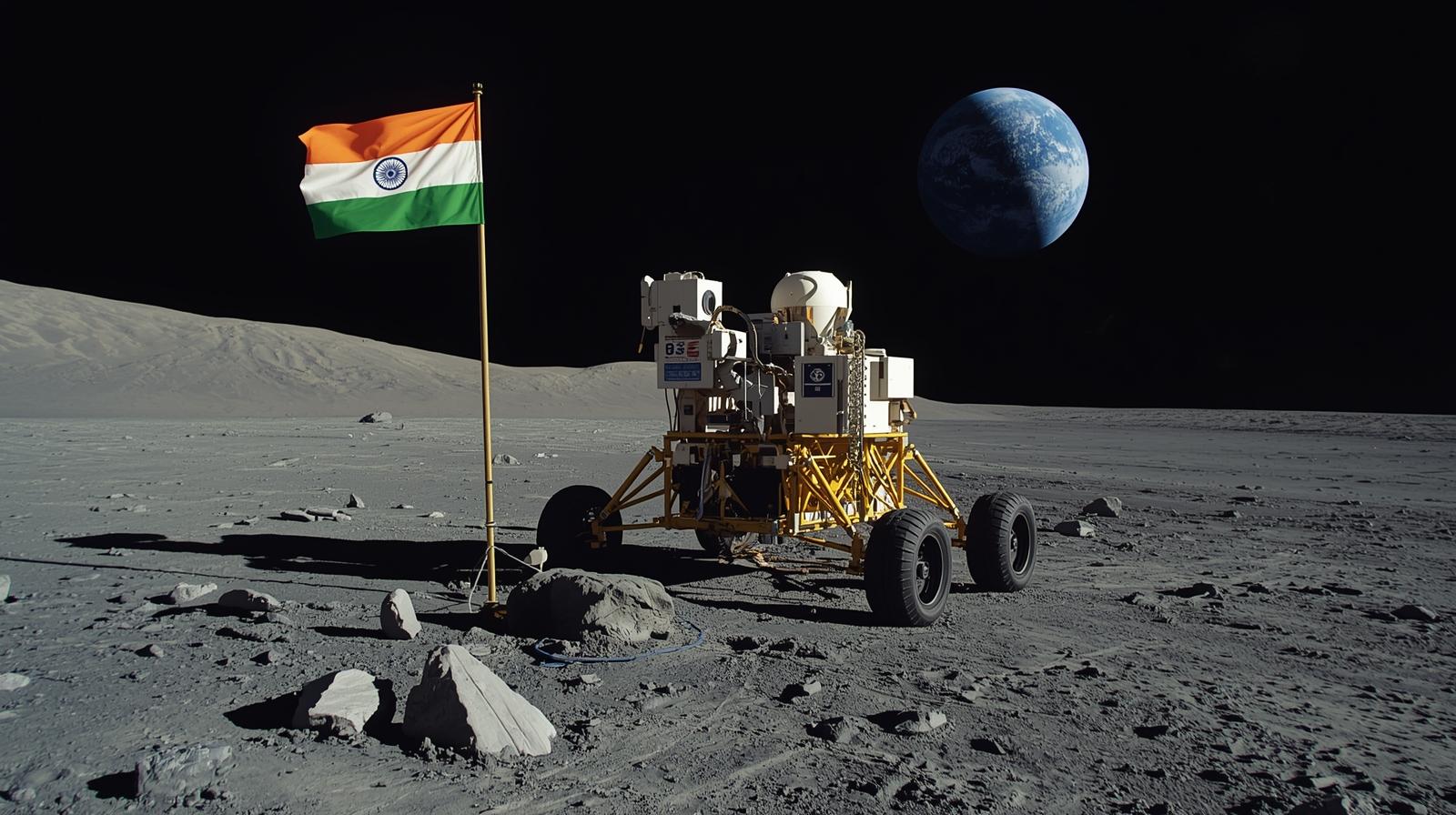
Meanwhile, India is making incredible progress in lunar exploration. Countries around the world are joining the new space race. It’s an exciting time!
Why Moon Soles Matter to Everyone
You might think, “That’s interesting, but what does it mean for me?”
Well, let me tell you why moon soles matter.
First, the technology developed for space often helps us on Earth. Many materials invented for spacesuits are now in everyday products. From better athletic shoes to protective gear for workers, space technology improves our lives.
Second, moon soles represent human achievement. They show what we can do when we work together toward a common goal. Thousands of people worked on the Apollo program. Engineers, scientists, technicians, and astronauts all played their part.
Third, these boots inspire the next generation. When kids see those footprints, they dream of becoming astronauts, engineers, or scientists. They imagine walking on the Moon themselves someday.
In fact, some of those kids might be the ones who return humans to the Moon. Or maybe they’ll be the first to walk on Mars. The possibilities are endless.
Moreover, moon soles teach us about problem-solving. Engineers faced seemingly impossible challenges. They had to design boots for an environment no one had experienced before. Yet they succeeded brilliantly.
The Science Behind the Footprint
Let’s dive into the fascinating science for a moment.
Buzz Aldrin’s bootprint in lunar soil at Tranquility Base was about 2.5 centimeters (1 inch) deep, demonstrating the fineness and cohesiveness of the lunar soil. This measurement told scientists important things about the Moon’s surface.
The lunar soil, or regolith, is very different from Earth soil. It’s made of tiny glass particles created by billions of years of meteorite impacts. These particles are incredibly sharp under a microscope. They stick together because of static electricity and the lack of water.
Interestingly, the dust is so fine that it got everywhere. It stuck to the astronauts’ suits and equipment. In fact, astronauts said it smelled like gunpowder. Some even tracked it back into their spacecraft despite efforts to brush it off.
Additionally, lunar dust can be harmful. It’s abrasive and could damage equipment or harm lungs if inhaled. That’s another reason why good moon soles are so important. They need to minimize dust kicked up while walking.
Scientists studied these footprints carefully. They learned about soil density, compaction, and how materials behave in low gravity. This information helps plan future missions and design better equipment.
For those interested in more detailed information about the Moon and its characteristics, there are excellent resources available.
What Makes the Perfect Moon Sole?
So, what qualities make a perfect moon sole?
After studying Apollo boots and modern designs, we know several key features are essential. Let me break them down for you.
Temperature Protection: The sole must handle extreme temperature swings. It needs to keep feet warm in freezing shadows and cool in burning sunlight. Materials must not crack or become brittle in cold or melt in heat.
Traction: The tread pattern must grip loose, dusty surfaces. It can’t be too aggressive (kicking up dust) or too smooth (causing slips). The design must work in one-sixth gravity.
Durability: The sole must withstand sharp rocks and abrasive dust. It needs to last for hours of walking without wearing through. Any failure could be catastrophic.
Flexibility: While providing protection, the sole should allow natural foot movement. This prevents fatigue and potential injuries during long missions.
Weight: Every ounce matters in space missions. The sole must be light enough not to burden astronauts but strong enough to protect them.
Ease of Use: Astronauts must put on and remove boots while wearing thick gloves. The design must be simple and reliable.
These requirements make designing moon soles incredibly challenging. But engineers love challenges!
The Emotional Impact of Moon Soles
Let me get personal with you for a moment.
When I look at pictures of those bootprints on the Moon, I feel something deep inside. It’s hard to explain. It’s a mixture of pride, wonder, and hope.
Those footprints represent more than just steps. They represent dreams realized. They show that humans can overcome any obstacle when we set our minds to it.
Think about it this way. Thousands of years ago, our ancestors looked up at the Moon.
Then, on July 20, 1969, we finally did it. Neil Armstrong took that first step. His moon sole touched lunar dust. And everything changed.
Suddenly, the impossible became possible. If we could go to the Moon, what else could we do? That moment opened up infinite possibilities.
Even now, decades later, those footprints inspire us. They remind us that we’re capable of incredible things. They encourage us to keep exploring, keep learning, and keep pushing boundaries.
Furthermore, those bootprints connect us all. Regardless of where you live or what language you speak, we all share this achievement. Humans walked on the Moon. We did it together.
Looking Forward: The Future of Moon Soles
What does the future hold for moon soles?
Scientists and engineers are working on next-generation designs right now. These new boots will be better than ever before. They’ll use modern materials and advanced technology.
For example, new boots might have built-in sensors. These sensors could monitor astronaut health, track steps, and measure environmental conditions. Smart boots for smart missions!
Additionally, 3D printing technology might allow custom-fitted boots for each astronaut. Perfect fit means better comfort and performance. This wasn’t possible in the Apollo era.
Moreover, researchers are exploring new materials. Some materials can change properties based on temperature. They become rigid when cold but flexible when warm. This could solve the flexibility problem for polar missions.
Furthermore, future boots might have better dust protection. Special coatings could prevent dust from sticking. Sealed designs could keep dust out of the boot entirely.
In addition, sustainability is becoming important. Can we make boots from materials available on the Moon? Could astronauts manufacture replacement parts using lunar resources? These questions drive current research.
The future is bright. Soon, a new generation of astronauts will leave fresh footprints on the Moon. They’ll use advanced moon soles that build on Apollo’s legacy.
Why This Matters to You Right Now
You might still be wondering, “Why should I care about moon soles?”
Here’s why it matters to your life today.
Space technology drives innovation in many fields. The research done for moon soles has applications right here on Earth. Better athletic shoes, improved work boots, and advanced protective gear all benefit from this research.
Moreover, this story teaches valuable lessons. It shows the importance of preparation, attention to detail, and teamwork. Whether you’re a student, professional, or parent, these lessons apply to your life.
Additionally, space exploration inspires education. Kids who learn about moon soles might pursue careers in science, technology, engineering, or mathematics. They become tomorrow’s innovators and problem-solvers.
Furthermore, this history reminds us of our potential. When facing challenges in your own life, remember: humans designed boots that worked perfectly on the Moon. You can overcome your challenges too.
The moon sole story is ultimately about human achievement. It’s about what happens when talented people work together toward a common goal. It’s about never giving up on dreams, no matter how impossible they seem.

Conclusion: One Small Step, One Giant Leap
So, we’ve journeyed through the incredible story of moon soles together.
More importantly, we’ve connected with the human side of space exploration. Those bootprints aren’t just marks in dust. They’re testaments to courage, ingenuity, and the human spirit.
Gene Cernan’s boots sit in a museum today. But they represent so much more than old equipment. They symbolize humanity’s greatest adventure. They remind us that we can achieve the impossible.
As we look toward the future, new moon soles are being designed. New astronauts will walk on the Moon. New footprints will join those already there. The story continues.
And perhaps, one day, you or someone you know will leave their own footprints on the Moon. With the right moon sole, anything is possible.
Ready to Explore More Space Wonders?
Are you fascinated by space exploration and lunar history? Do you want to stay updated on the latest missions and discoveries?
Join our space-loving community today! Get exclusive articles, breaking news, and behind-the-scenes stories about humanity’s journey to the stars.
Click below to subscribe to our newsletter and never miss an update about lunar exploration, new space technologies, and inspiring stories from the final frontier!

jafir
Jafir Abbas is the visionary founder and owner of Astronive.com, a leading online hub for astronomy enthusiasts, space exploration insights, and cosmic discoveries. With a passion for the mysteries of the universe, Jafir has dedicated his work to making complex astronomical concepts accessible and engaging for readers of all ages. Under his guidance, Astronive.com has become a trusted resource for space news, celestial events, and educational content that inspires curiosity about the cosmos. Jafir combines a keen interest in science with a commitment to clear, engaging communication, bringing the wonders of the universe closer to everyone.
View all posts