

why do we need the moon?
Look up at the night sky. See that bright, glowing ball? That’s our Moon. However, it’s not just pretty to look at. In fact, many people wonder why we need the moon in the first place. The answer is simple. It keeps us alive. Without it, Earth would be a very different place. For instance, days would be shorter. Meanwhile, nights would be pitch black. Additionally, the oceans wouldn’t have tides. Even worse, our planet would wobble like a spinning top about to fall.
Over the decades, scientists have studied the Moon carefully. As a result, they’ve discovered something amazing. This rocky neighbor does much more than light up our nights. Instead, it protects us. Furthermore, it guides us. It even controls our weather. So, want to know how? Let me share what experts have learned about our closest space companion. Ultimately, you’ll never look at the Moon the same way again.
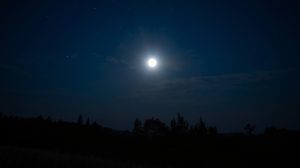
Key Reasons We Need the Moon
Our Moon plays a bigger role than most people realize. It’s not just a beautiful object in space. Instead, it works like Earth’s guardian. Scientists have spent years studying its effects. What they found changed everything we know about life on our planet.
Climate Stability
First and foremost, the Moon keeps our climate steady. Think about it this way. Earth tilts on its axis at about 23.5 degrees. This tilt gives us our seasons. However, without the Moon’s gravity, Earth would wobble wildly.
Researchers at NASA have confirmed this. Our planet would tilt anywhere from 0 to 85 degrees. That’s a huge problem. One year, the North Pole could face the sun directly. The next year, it might fade away completely.
Consequently, we’d have extreme weather. Summers would become unbearably hot. Winters would freeze everything solid. Moreover, these changes would happen too fast for life to adapt. Plants couldn’t survive. Animals would struggle. Even humans would face impossible conditions.
The Moon’s gravitational pull prevents this chaos. It acts like a stabilizer. As a result, our climate changes slowly and predictably. This stability allowed life to evolve over millions of years.
Tidal Influence
Next, let’s talk about ocean tides. The Moon creates them through its gravitational force. Twice a day, the oceans rise and fall. This might seem simple. But it’s actually crucial for life.
Tides do several important things. First, they clean our coastlines. They bring nutrients from the deep ocean to shallow waters. Additionally, they create unique habitats. Tidal pools host thousands of species. Many sea creatures depend on these areas to survive.
Furthermore, tides affect our weather patterns. They help mix warm and cold ocean waters. This mixing influences rainfall and temperature. Without tides, our climate would be very different.
Early life on Earth also benefited from tides. Scientists believe tides helped the first creatures move from water to land. The regular rise and fall created perfect conditions. It gave early animals time to adapt to both environments.
According to research published by the National Ocean Service, tides also generate renewable energy. Many countries now use tidal power plants. This clean energy helps reduce pollution.
How the Moon Affects Our Daily Lives
Rotation Speed
Here’s something surprising. The Moon actually slows down Earth’s rotation. Billions of years ago, a day on Earth lasted only 6 hours. Over time, the Moon’s gravity has been slowing us down.
Today, one day lasts 24 hours. This happened gradually over millions of years. The Moon pulls on Earth’s oceans. This creates friction. Slowly but surely, our planet’s spin decreases.
Why does this matter? A 24-hour day is perfect for life. It gives us balanced periods of light and darkness. Plants need this rhythm for photosynthesis. Animals need it for their sleep cycles. Even our own bodies depend on it.
Without the Moon, days would still be short. Imagine having only 8-hour days. You’d see the sun rise and set three times in what we now call one day. This would confuse all living things. Sleep patterns would be disrupted. Plants couldn’t grow properly.
Moreover, the Moon continues to move away from Earth. It drifts about 1.5 inches farther each year. Eventually, days will become even longer. But this happens so slowly that life can adapt.
Biological Rhythms
Moving forward, let’s explore how the Moon affects living creatures. Many animals follow lunar cycles. This connection goes deeper than you might think.
Sea turtles use moonlight to find their way. After hatching, baby turtles head toward the brightest horizon. Normally, that’s the moon reflecting on the ocean. This instinct has guided them for millions of years.
Similarly, coral reefs spawn according to the Moon. They release eggs and sperm at specific lunar phases. This synchronized breeding happens worldwide. It ensures better chances of reproduction.
Birds also use the Moon for navigation. During migration, they follow lunar patterns. The Moon helps them find their way across continents. Without it, many species would get lost.
Even human biology connects to lunar cycles. Our bodies follow circadian rhythms. These internal clocks match Earth’s 24-hour rotation. The Moon helped establish this rhythm. Studies show that sleep patterns can shift during full moons.
In addition, some research suggests the Moon affects other bodily functions. However, scientists are still studying these connections. What’s clear is that the Moon has influenced life’s evolution on Earth.
Protective Shield
Now, here’s a critical function most people don’t know about. The Moon acts as Earth’s protector. It shields us from dangerous space rocks.
Meteoroids constantly fly through our solar system. Many head toward Earth. However, the Moon’s gravity pulls some away. It literally takes hits meant for us. Just look at the Moon’s surface. Those craters tell the story.
Each crater represents a potential disaster avoided. Some of those asteroids would have struck Earth instead. The impacts could have wiped out entire species. Therefore, the Moon has protected life for billions of years.
Additionally, the Moon helped clear Earth’s orbit. Early in our solar system’s history, space was filled with debris. The Moon’s presence helped sweep this area clean. It made Earth’s neighborhood safer.
Scientists estimate that without the Moon, Earth would suffer more impacts. We’d face asteroid strikes more frequently. This would make life much more dangerous. Cities could be destroyed. Entire regions could become uninhabitable.
Beyond Science: Cultural and Scientific Significance
Cultural Impact
Throughout history, humans have looked up at the Moon with wonder. Every culture has Moon stories. Ancient civilizations created calendars based on lunar cycles. Even today, many festivals follow the Moon’s phases.
The Moon inspired art, music, and literature. Poets wrote about it. Artists painted it. Musicians composed songs about moonlight. It connects all of humanity through shared experience.
Moreover, the Moon drove human curiosity. It pushed us to explore. In 1969, humans first walked on the Moon. This achievement showed what we could accomplish together. It united people across the world.
Scientific Discovery
From a scientific perspective, the Moon continues to teach us. Every mission reveals new information. We’ve learned about Earth’s formation. We’ve discovered water ice on the Moon. We’ve studied its geology and composition.
Furthermore, the Moon serves as a testing ground. Space agencies plan to build bases there. These bases will help us travel to Mars. The Moon is our stepping stone to deeper space exploration.
Research conducted by space agencies worldwide has shown the Moon’s importance. According to NASA’s Artemis program, returning to the Moon will advance science and technology. It will benefit life here on Earth.
The Moon also helps us understand other planets. By studying it, we learn how celestial bodies form. We discover how they interact. This knowledge applies throughout our solar system.
Frequently Asked Questions
What would happen if the Moon disappeared?
If the Moon vanished suddenly, Earth would face serious problems. First, nights would become completely dark. Only starlight would remain. Second, ocean tides would shrink to about one-third their current size. Third, Earth’s tilt would become unstable. Our seasons would go crazy within a few million years. Finally, days would gradually become shorter over time.
Does the Moon affect human behavior?
Scientists have studied this question extensively. While many people believe in lunar effects, solid evidence is limited. Some studies show minor sleep disruptions during full moons. However, claims about increased crime or emergency room visits lack scientific support. The Moon definitely affects our biology through light and circadian rhythms. But dramatic behavioral changes remain unproven.
How did the Moon form?
Most scientists support the giant impact hypothesis. About 4.5 billion years ago, a Mars-sized object hit Earth. The collision threw debris into space. This material eventually clumped together. Over time, it formed our Moon. This theory explains why the Moon’s composition matches Earth’s outer layers.
Is the Moon moving away from Earth?
Yes, absolutely. The Moon moves away at roughly 1.5 inches (3.8 centimeters) per year. This happens because of tidal friction. As Earth’s rotation slows, the Moon gains energy. It spirals outward gradually. Don’t worry though. This process takes millions of years. The Moon will stay with us for a very long time.
Can we survive without the Moon?
Technically, humans could survive without the Moon. However, life would be much harder. We’d face extreme climate swings eventually. Days would be shorter and inconsistent. Tides would be minimal. Many ecosystems would collapse. Modern civilization would struggle to adapt. Basically, Earth would be a much less hospitable place.

Conclusion
The Moon is far more than a pretty sight in our night sky. It’s Earth’s partner in creating stable conditions for life. From controlling our climate to generating ocean tides, it works constantly behind the scenes.
We often take the Moon for granted. Yet without it, life as we know it wouldn’t exist. It has shaped our planet’s environment for billions of years. It continues to protect us from space dangers. It maintains the rhythms that all living things depend on.
Understanding why we need the moon helps us appreciate our place in the universe. It shows how delicate and interconnected everything is. The Moon reminds us that Earth doesn’t exist in isolation.
As we continue exploring space, the Moon will play an even bigger role. It will serve as our launchpad to other worlds. It will provide resources and scientific knowledge. Most importantly, it will always be there, guiding us through the darkness.
Next time you see the Moon, remember everything it does for us. Thank it silently for keeping Earth stable and safe. Because without our loyal companion, we wouldn’t be here to admire it at all.

jafir
Jafir Abbas is the visionary founder and owner of Astronive.com, a leading online hub for astronomy enthusiasts, space exploration insights, and cosmic discoveries. With a passion for the mysteries of the universe, Jafir has dedicated his work to making complex astronomical concepts accessible and engaging for readers of all ages. Under his guidance, Astronive.com has become a trusted resource for space news, celestial events, and educational content that inspires curiosity about the cosmos. Jafir combines a keen interest in science with a commitment to clear, engaging communication, bringing the wonders of the universe closer to everyone.
View all posts

