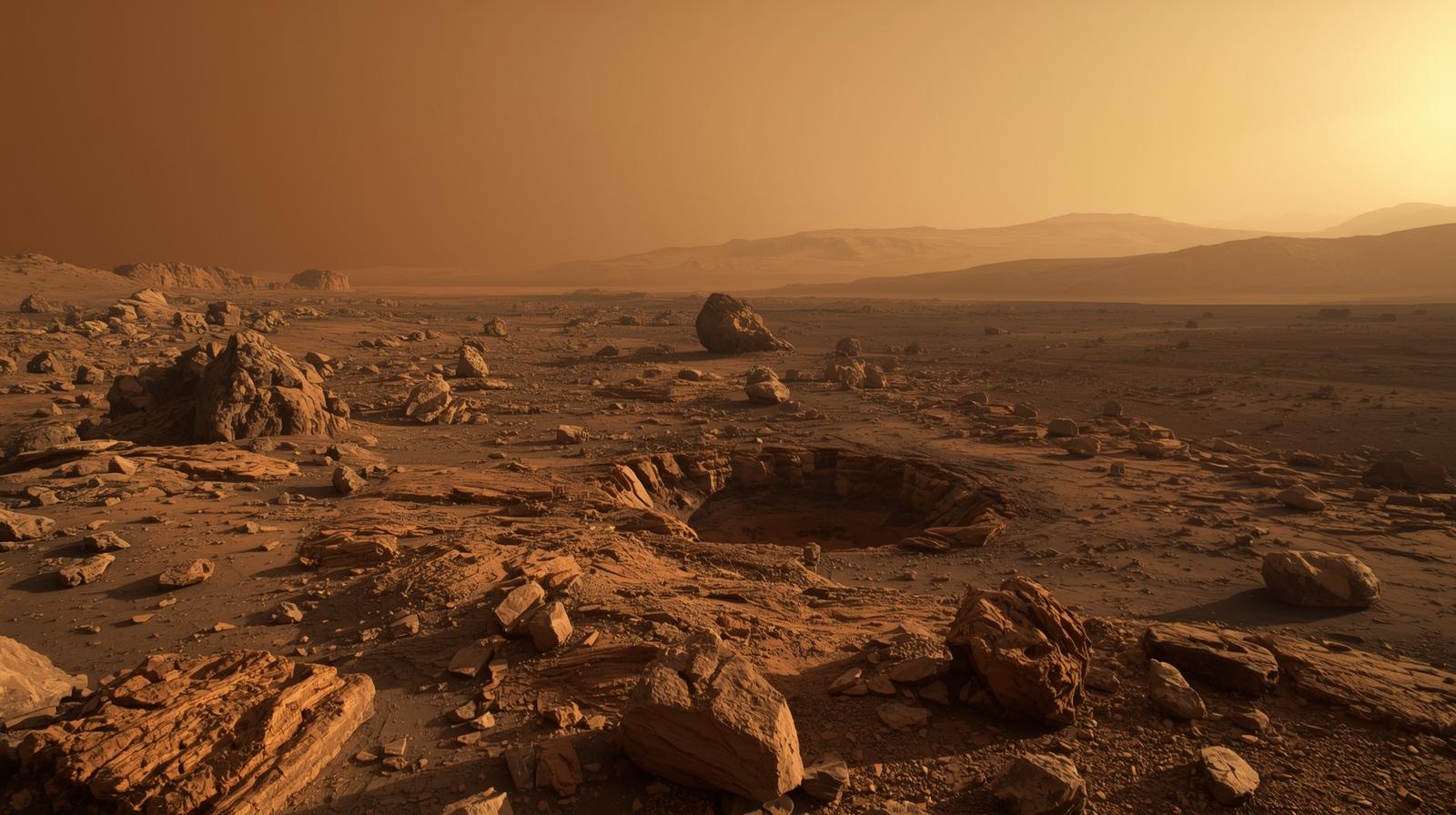
Mars Rain: Did Water Once Fall From Martian Skies?
Imagine standing on Mars billions of years ago. You look up at the rusty red sky, and suddenly, you feel something wet on your face this is mars rain. It’s raining. Not the gentle drizzle we know on Earth, but something entirely different. Something that would change our understanding of the Red Planet forever.
Today, Mars is a frozen desert. However, scientists have discovered something amazing. Mars rain might have once poured down from ancient Martian clouds, shaping rivers, carving valleys, and perhaps even creating conditions for life.
In this article, we’ll explore the fascinating evidence of ancient Mars rain, what it means for our understanding of the Red Planet, and why this discovery matters for humanity’s future in space.

What Is Mars Rain and Why Does It Matter?
Mars rain refers to precipitation that scientists believe fell on Mars billions of years ago. Unlike the dry, dusty planet we see today, ancient Mars was likely much wetter and warmer.
So why should we care about rain on a distant planet?
First, water is essential for life as we know it. If Mars once had rain, it probably had rivers, lakes, and maybe even oceans. Moreover, these conditions could have supported microbial life.
Second, understanding ancient Mars helps us learn about Earth’s own history. Both planets started similarly, but they ended up very different. Therefore, studying Mars rain gives us clues about how planets evolve and what makes them habitable.
Finally, this knowledge is crucial for future Mars missions. If we know where water once flowed, we know where to look for signs of ancient life. Additionally, we can identify the best locations for human settlements.
The Evidence: How Scientists Discovered Mars Rain
Scientists didn’t just guess that it rained on Mars. Instead, they found solid evidence written in the Martian landscape.
Valley Networks Tell a Story
Mars is covered with thousands of valley networks. These look remarkably similar to river valleys on Earth. Furthermore, these valleys branch out like trees, which is exactly what happens when rain flows downhill and creates streams.
Dr. Robert Craddock from the Smithsonian Institution studied these valleys for years. He discovered that the patterns match what we see when rainfall shapes Earth’s landscape. In other words, the evidence strongly suggests that Mars rain carved these features over millions of years.
Ancient Riverbeds and Deltas
Beyond valleys, scientists have found ancient riverbeds. NASA’s rovers have photographed rounded pebbles that could only form when water tumbles them around. Similarly, orbital images show massive delta formations where rivers once emptied into lakes.
These aren’t small features either. Some ancient Martian rivers were hundreds of miles long. Consequently, they must have been fed by substantial and sustained precipitation.
Mineral Clues in Martian Rocks
Minerals don’t lie. When water interacts with rocks, it creates specific types of minerals. NASA’s rovers have found clay minerals and other water-altered rocks across Mars.
These minerals form only in the presence of liquid water. Moreover, the specific types found suggest that water was present for long periods. This supports the theory that Mars experienced regular rainfall, not just occasional flooding.
How Hard Did It Rain on Ancient Mars?
Here’s where things get really interesting. Scientists wanted to know if Mars rain was a light drizzle or a heavy downpour.
The Rainfall Intensity Study
Researchers from Princeton University conducted detailed simulations. They calculated how much water would be needed to carve the valleys we see today. Additionally, they estimated how dense the ancient Martian atmosphere would need to be.
Their findings were surprising. Mars rain was probably quite intense. The drops might have been larger than Earth raindrops because of Mars’ lower gravity. As a result, each drop packed more punch when it hit the ground.
However, the total rainfall was likely less than what tropical regions on Earth receive. Nevertheless, it was enough to create flowing rivers and reshape the landscape dramatically.
Seasonal Patterns
Evidence suggests that Mars rain wasn’t constant. Instead, it probably followed seasonal patterns, much like monsoons on Earth. During warmer periods, precipitation increased. Then, during colder seasons, water would freeze.
This cycle of rain, freeze, and thaw would have been incredibly effective at eroding rock and creating the dramatic features we see today.
When Did Mars Rain Stop and Why?
About 3.5 billion years ago, something catastrophic happened. Mars lost most of its atmosphere, and the rain stopped forever.
The Atmospheric Loss
Mars is smaller than Earth and has weaker gravity. Over millions of years, solar wind stripped away the Martian atmosphere. Without a thick atmosphere, liquid water couldn’t exist on the surface anymore.
Furthermore, Mars lost its magnetic field around the same time. Earth’s magnetic field protects our atmosphere from solar wind. Without this protection, Mars was vulnerable, and its atmosphere gradually disappeared into space.
The Frozen Wasteland Emerges
As the atmosphere thinned, temperatures dropped dramatically. Any remaining water froze or evaporated. The planet that once experienced Mars rain became the frozen desert we know today.
However, the story isn’t completely over. Scientists believe massive amounts of water remain frozen underground and in the polar ice caps. If conditions changed, could Mars rain return?
Case Study: Jezero Crater and the Evidence of Ancient Rivers
Let’s look at a real example that brings this all together. NASA’s Perseverance rover is currently exploring Jezero Crater, and the findings are remarkable.
Why Jezero Crater Was Chosen
Scientists selected Jezero Crater because orbital images showed it once contained a large lake. Moreover, a river delta clearly visible from space flows into the crater.
This ancient river system would have been fed by Mars rain falling in the surrounding highlands. The water would flow downhill, carrying sediments and potentially organic materials into the lake.
What Perseverance Found
Since landing in February 2021, Perseverance has confirmed that Jezero was indeed an ancient lake. The rover has found:
- Rounded river rocks that water wore smooth
- Layered sediments deposited by flowing water
- Clay minerals that form in wet environments
- Evidence of flash floods that periodically surged through the delta
These findings paint a vivid picture. Imagine ancient Mars experiencing heavy Mars rain in the highlands. The water rushes down slopes, carving valleys and carrying rocks. Eventually, it pours into Jezero’s lake, depositing layers of sediment that preserved the history of Martian water.
Furthermore, scientists believe this delta could be one of the best places to find fossilized microbial life. If life ever existed on Mars, it might have thrived in this ancient lake environment.
The Timeline
Based on rock dating and crater analysis, scientists estimate that Jezero’s lake existed between 3.8 and 3.6 billion years ago. This was during Mars’ wet period when rain still fell regularly.
The lake probably persisted for millions of years. However, as the climate changed and Mars rain became less frequent, the lake eventually dried up, leaving behind the crater we see today.
What Mars Rain Means for Finding Ancient Life
The existence of ancient Mars rain dramatically increases the possibility that life once existed on the Red Planet.
Water Equals Life (Usually)
On Earth, wherever we find water, we find life. From boiling hot springs to frozen Antarctic lakes, life adapts and survives. Therefore, if Mars had sustained rainfall and standing water for millions of years, it’s reasonable to think life might have emerged there too.
Scientists aren’t talking about little green men. Instead, they’re looking for evidence of microscopic organisms similar to Earth’s earliest bacteria.
The Best Places to Look
Knowing where Mars rain once fell helps scientists identify promising search locations. Ancient lake beds, river deltas, and valley floors are prime targets. These areas would have accumulated organic materials and provided stable environments for life.
NASA’s current and future missions are specifically targeting these locations. The Perseverance rover is collecting samples from Jezero Crater that will eventually return to Earth for detailed analysis.
The Impact on Future Missions
Understanding ancient Mars rainfall also helps us plan human missions. We now know that substantial water resources exist on Mars. This water could be extracted from underground ice deposits that accumulated during the rainy period.
Additionally, learning how Mars lost its water helps us develop strategies to prevent the same thing from happening to Earth. Climate science benefits enormously from studying our planetary neighbor.
Could Mars Rain Ever Return?
This might sound like science fiction, but scientists are seriously discussing whether we could restore Mars’ climate.
Terraforming Mars
Terraforming means transforming Mars to make it more Earth-like. The goal would be to thicken the atmosphere, raise temperatures, and potentially allow liquid water on the surface again.
However, this would be an enormous undertaking. It would require releasing greenhouse gases to warm the planet and creating an artificial magnetic field to protect the atmosphere. Current technology isn’t anywhere close to making this possible.
Nevertheless, understanding what caused Mars rain billions of years ago gives us a blueprint. We know what conditions are necessary. Whether humans will ever create those conditions remains an open question.
Natural Climate Cycles
Some scientists speculate that Mars’ climate might naturally vary over very long time periods. Changes in the planet’s axial tilt could occasionally create warmer conditions. However, these cycles would take tens of thousands of years and probably wouldn’t restore conditions wet enough for sustained rainfall.
Frequently Asked Questions About Mars Rain
When did it last rain on Mars?
Mars rain likely stopped around 3.5 billion years ago when the planet lost most of its atmosphere. Since then, Mars has been too cold and the air too thin for liquid water to exist on the surface.
Was Mars rain similar to Earth rain?
Not exactly. Mars rain probably had larger droplets due to lower gravity. Additionally, the rain was likely less frequent overall, but potentially quite intense when it did fall.
How do scientists know it rained on Mars?
Scientists have found valley networks carved by flowing water, ancient riverbeds with rounded pebbles, river deltas, and water-altered minerals. These features could only form with sustained liquid water, most likely from rainfall.
Is there any water on Mars today?
Yes, but not as liquid on the surface. Mars has substantial water frozen in polar ice caps and underground. Water vapor also exists in the thin atmosphere, and seasonal ice forms during Martian winters.
Could humans use ancient Mars water sources?
Potentially yes. The underground ice deposits that remain from the wet period could be extracted and purified for human use. This makes certain locations much more attractive for future Mars bases.
The Bigger Picture: What Mars Rain Teaches Us
The story of Mars rain is ultimately a story about planetary evolution and the fragility of habitable conditions.
Mars and Earth started similarly. Both had atmospheres, both had water, and both could have supported life. Yet today, one planet thrives with life while the other is frozen and barren.
Understanding what went wrong on Mars helps us appreciate what makes Earth special. Moreover, it teaches us how to protect our own planet’s climate and atmosphere.
As we continue exploring Mars, each discovery adds another piece to the puzzle. The ancient rain that once fell from Martian skies shaped not just the landscape, but also our understanding of where life might exist in the universe.

Conclusion: The Legacy of Ancient Martian Rainfall
Mars rain stopped falling billions of years ago, but its impact continues to shape scientific discovery today. The valleys it carved, the rocks it smoothed, and the minerals it created provide a window into Mars’ ancient past.
This research matters for multiple reasons. It helps us search for ancient life on Mars, plan future human missions, and understand our own planet better. Additionally, it reminds us that planets can change dramatically over time.
The Red Planet might be dry today, but its past was far wetter than scientists once believed. As rovers continue exploring and new missions launch, we’re constantly learning more about this ancient Martian water cycle.
Every discovery brings us closer to answering fundamental questions: Was Mars once alive? Could it host life again? And what does its history tell us about our own planet’s future?
The story of Mars rain isn’t finished yet. In fact, we’re just beginning to understand it fully. Want to explore more about the fascinating Martian surface and what makes it so unique?
For the latest scientific research on ancient Martian precipitation, check out this comprehensive study on Mars rainfall patterns that provides deeper insights into how water shaped the Red Planet.

jafir
Jafir Abbas is the visionary founder and owner of Astronive.com, a leading online hub for astronomy enthusiasts, space exploration insights, and cosmic discoveries. With a passion for the mysteries of the universe, Jafir has dedicated his work to making complex astronomical concepts accessible and engaging for readers of all ages. Under his guidance, Astronive.com has become a trusted resource for space news, celestial events, and educational content that inspires curiosity about the cosmos. Jafir combines a keen interest in science with a commitment to clear, engaging communication, bringing the wonders of the universe closer to everyone.
View all posts