Sirius: The Brightest Star That’s Been Watching Over Us for Thousands of Years
Have you ever looked up at the night sky and wondered which star shines the brightest? That dazzling point of light you see isn’t just any star. It’s Sirius, and it’s been capturing human hearts for thousands of years. Moreover, this cosmic beacon has a fascinating story that connects ancient civilizations with modern science.
Let me take you on a journey through space and time. You’ll discover why Sirius isn’t just bright—it’s special.
What Makes Sirius So Special?
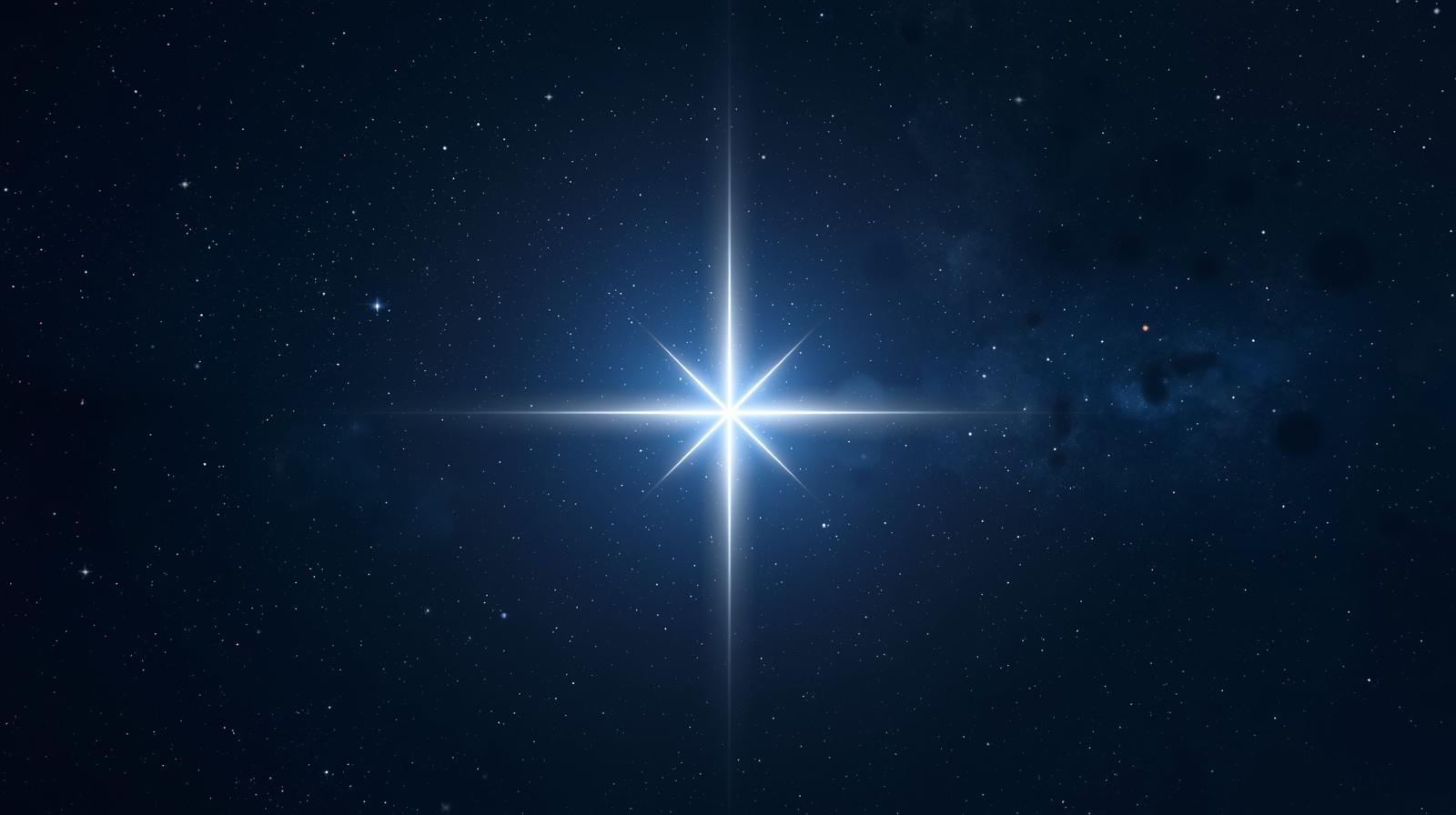
Sirius is the brightest star in our night sky. In fact, only the Moon, a few planets, and our Sun outshine it. Think about that for a moment—out of billions of stars, this one stands out like a diamond in the darkness.
Additionally, Sirius sits just 8.6 light-years away from Earth. That might sound far, but in space terms, it’s practically our neighbor. To put it in perspective, if you could drive there in a car going 60 miles per hour, it would take you about 97 million years!
Furthermore, ancient people noticed Dog Star too. The Egyptians called it the “Nile Star” because it appeared right before the river flooded each year. These floods brought water and rich soil to their farms. Therefore, Sirius became a symbol of life and rebirth.
The Dog Star: A Name With History
You might hear people call Sirius the “Dog Star.” But why? Well, it’s part of a constellation called Canis Major, which means “Greater Dog” in Latin. Ancient Greek storytellers imagined this star pattern as a hunting dog following the hunter Orion across the sky.
Meanwhile, the Romans had a different view. They believed Sirius brought the hottest days of summer. That’s why we still say “dog days of summer” today! People thought the star’s heat combined with the Sun’s warmth to create those sweltering July and August days.
How to Find Sirius in Your Sky Tonight
Want to spot Dog Star yourself? It’s easier than you think! First, find the constellation Orion. Look for three bright stars in a row—that’s Orion’s Belt. Now, follow that line down and to the left. The brightest star you see? That’s Sirius winking at you.
Best of all, you don’t need a telescope. Dog Star shines so brightly that you can see it with just your eyes. However, it looks even more amazing when viewed from a dark place away from city lights.
In addition, Dog Star appears to twinkle and change colors—red, blue, white, and everything in between. This isn’t magic. It’s Earth’s atmosphere bending the starlight as it travels through layers of air. Scientists call this “atmospheric turbulence.”
Sirius Has a Secret Companion
Here’s something incredible. Dog Star isn’t alone. It has a tiny companion star called Sirius B. But there’s a twist—this small star is incredibly dense and heavy.
Let me explain. Sirius B is what scientists call a “white dwarf.” Once upon a time, it was a normal star like our Sun. Then it ran out of fuel and collapsed. Now, it’s about the size of Earth but weighs almost as much as the Sun! Imagine squeezing something as heavy as the Sun into something as small as our planet.
Furthermore, scientists didn’t discover Dog Star B until 1862. It’s so faint that you need a powerful telescope to see it. Nevertheless, its gravity affects how Sirius A moves through space. That’s how astronomers knew it was there before they could actually see it.
A Real-Life Example: How Sirius Helped Scientists
In 2005, astronomers used the Hubble Space Telescope to study Dog Star B more closely. They wanted to test Einstein’s theory about gravity and light. According to Einstein, strong gravity should make light appear redder. It’s called “gravitational redshift.”
Scientists measured the light from Dog Star B. Guess what? Einstein was right! The light from this dense star was shifted toward the red end of the spectrum, just like Einstein predicted. This wasn’t just a cool discovery—it proved one of the most important scientific theories of all time.
As a result, Dog Star B became a valuable laboratory in space. Scientists continue studying it to understand how stars die and what happens to their remains.
Sirius in Different Cultures Around the World
Ancient Egyptians weren’t the only ones fascinated by Dog Star. Cultures across the world created stories about this bright star.
In India, people told tales of Prince Yudhishthira and his faithful dog, Svana. The prince and his brothers searched for heaven, but one by one, the brothers gave up. Only the prince and Svana continued. When they finally reached heaven’s gates, the gatekeeper said the dog couldn’t enter.
However, the prince refused to abandon his loyal companion. He told the gatekeeper that his brothers had left to follow their desires, but the dog had stayed faithful through everything. The gatekeeper was testing the prince’s heart. Because of his loyalty and compassion, both the prince and Svana were welcomed into heaven together.
Similarly, Greek sailors used Dog Star to navigate. When this star rose before sunrise in summer, they knew it was time to harvest grapes and prepare for the changing seasons.
The Science Behind Sirius’s Brightness
Why is Dog Star so bright? Several reasons work together to create this spectacular sight.
First, Dog Star is a hot star. Its surface temperature reaches about 17,000 degrees Fahrenheit (9,400 Celsius). That’s almost twice as hot as our Sun! Hot stars naturally shine brighter.
Second, Dog Star is close to us. Remember, it’s only 8.6 light-years away. Many stars are actually brighter than Dog Star, but they’re so far away that they appear dimmer from Earth.
Third, Dog Star produces about 26 times more energy than our Sun. It’s a powerhouse! Imagine having a lightbulb that’s 26 times brighter than your regular bulb. That’s the difference between our Sun and Sirius.
Common Questions About Sirius
Is Sirius the closest star to Earth?
No, but it’s one of the closest. The closest star system is Alpha Centauri, which is 4.37 light-years away. However, Sirius is the fifth closest star system to Earth.
Can I see Sirius during summer?
During summer in the Northern Hemisphere, Dog Star is up during the day. Therefore, the Sun’s brightness makes it invisible. You’ll have the best views from December through April when Sirius appears in the evening sky.
Will Sirius always be the brightest star?
Not forever. Stars move through space, and over thousands of years, their distances from Earth change. Eventually, another star might become brighter from our viewpoint. However, this won’t happen anytime soon.
Does Sirius have planets?
Scientists haven’t found any planets around Dog Star yet. The star system is young, and the presence of Sirius B makes planet formation difficult. Nevertheless, astronomers continue searching.
Why do people sometimes report Sirius as a UFO?
Because Dog Star is so bright and appears to flash different colors, people sometimes mistake it for aircraft lights or UFOs. Additionally, when Sirius is low on the horizon, atmospheric effects make it twinkle dramatically. This can look unusual to someone unfamiliar with the night sky.
What Sirius Teaches Us About Our Universe
Dog Star reminds us that we’re part of something bigger. When you look at this star, you’re seeing light that left 8.6 years ago. If you’re 10 years old, that light started its journey when you were just a toddler!
Moreover, Dog Star connects us to our ancestors. The same star that guided ancient Egyptian farmers and Greek sailors still shines above us today. It watched over pyramids being built, empires rising and falling, and humanity’s first steps on the Moon.
Furthermore, studying Dog Star helps scientists understand how stars work, how they die, and what happens to them afterward. Every piece of knowledge we gain brings us closer to understanding our own star, the Sun, and its eventual fate billions of years from now.
Looking Forward: The Future of Sirius
Scientists will keep studying Dog Star for years to come. New telescopes and better technology let us see more details about both Sirius A and its tiny companion, Sirius B. Each discovery teaches us something new about stellar evolution.
In addition, Sirius serves as a reference point for astronomers. Because it’s so bright and well-studied, scientists use it to calibrate instruments and test new observation techniques. It’s like having a cosmic landmark in our neighborhood.
Similarly, Sirius continues inspiring new generations of stargazers. Kids who look up and spot the brightest star might become the astronomers, physicists, and space explorers of tomorrow. That sense of wonder—that “Wow!” moment when you first identify Dog Star—is where scientific curiosity begins.
If you’re fascinated by celestial wonders like Sirius, you’ll love exploring other cosmic mysteries too. The Cocoon Nebula offers another stunning example of the universe’s spectacular beauty.
Final Thoughts: Your Connection to Sirius
Tonight, when darkness falls, step outside and look up. Find those three stars in Orion’s Belt. Follow them down and left. There it is—Dog Star, the Dog Star, the brightest beacon in our night sky.
Think about this: you’re looking at a star that’s 25 times brighter than our Sun. You’re seeing light that traveled for 8.6 years across the emptiness of space just to reach your eyes. You’re gazing at the same star that ancient Egyptians, Greek sailors, and Indian storytellers admired thousands of years ago.
That connection spans time and culture. It unites humanity across centuries. And it reminds us that despite all our differences, we all share the same sky, the same stars, and the same sense of wonder when we look up at the universe.
So go ahead. Make Dog Star part of your life. Watch for it each winter. Show it to your friends and family. Tell them its stories. Because when you do, you’re not just looking at a star—you’re connecting with thousands of years of human history and millions of miles of cosmic wonder.
Take Action: Start Your Stargazing Journey
Ready to learn more about space and deepen your understanding of the cosmos? Don’t let this inspiration fade! Visit the Sirius Migration Education organization to discover educational resources that connect astronomy with global learning. Whether you’re a student, teacher, or lifelong learner, there’s always more to explore in our magnificent universe.
Remember, every expert astronomer started exactly where you are now—looking up at the night sky with curiosity and wonder. Sirius is waiting to show you its secrets. The only question is: are you ready to look up?
For more detailed scientific information about Sirius and its white dwarf companion, check out Space.com’s comprehensive guide to Sirius.

jafir
Jafir Abbas is the visionary founder and owner of Astronive.com, a leading online hub for astronomy enthusiasts, space exploration insights, and cosmic discoveries. With a passion for the mysteries of the universe, Jafir has dedicated his work to making complex astronomical concepts accessible and engaging for readers of all ages. Under his guidance, Astronive.com has become a trusted resource for space news, celestial events, and educational content that inspires curiosity about the cosmos. Jafir combines a keen interest in science with a commitment to clear, engaging communication, bringing the wonders of the universe closer to everyone.
View all posts