The Incredible Story of the CR7 Galaxy and Its Surprising Link to Cristiano Ronaldo
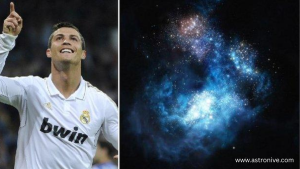
The universe is full of mysteries, but every now and then, scientists discover something so special that it makes the whole world stop and admire it. One such discovery is the cosmos redshift 7 , a bright and ancient galaxy that has captured the attention of astronomers and the general public alike. Interestingly, scientists named it after one of the biggest football stars — Cristiano Ronaldo, famously called CR7.
In this blog, we will explore the CR7 Galaxy in very simple English so that every reader can understand. We will explore how scientists discovered it, why it matters, what sets it apart from other galaxies, and how they named it by combining science and sports Moreover, we will include a case study, provide a helpful question-and-answer section, and add a follow link so you can stay connected. Throughout the blog, the writing will stay natural, clear, and human-like, just as a real writer would explain it.
What Exactly Is the CR7 Galaxy?
Although galaxies are common in the universe, the CR7 Galaxy is not an ordinary one. Astronomers call it a high-redshift galaxy, which simply means it is extremely far away from us. In fact, CR7 is so distant that the light coming from it started traveling toward Earth more than 13 billion years ago. This means we are seeing it as it was when the universe was still very young.
The CR7 Galaxy is located in the Sextans constellation, and scientists estimate it originally appeared around 800 million years after the Big Bang. Because of this, it belongs to the very early stage of the universe, a time when the first stars were born.
Interestingly, the CR7 Galaxy is also known for containing Population II and possibly Population III stars. These stars are extremely old, and many scientists believe they were responsible for creating the first heavy elements in the universe — elements that later helped form planets and life.
Why Is the CR7 Galaxy So Important?
There are several reasons why scientists are excited about CR7:
1. It Is Exceptionally Bright
When it was discovered, CR7 was found to be three times brighter than any other galaxy known from that early period. Its intense brightness makes it easier to study and helps scientists learn about the early universe.
2. It May Contain the First Stars Ever Formed
CR7 shows signs of containing Population III stars, which are theoretical first-generation stars. These stars formed shortly after the Big Bang, and they were thought to be extremely massive and hot. They created the very first heavy elements such as carbon and oxygen — elements necessary for life as we know it.
3. It Helps Explain the Era of Reionisation
Around 150 million years after the Big Bang, the universe was filled with neutral hydrogen gas, which blocked ultraviolet light. This made the universe foggy and dark. Later, during the epoch of reionisation, early stars and galaxies began releasing strong ultraviolet light, breaking apart the hydrogen atoms and allowing light to move more freely.
CR7 seems to be one of the galaxies that helped clear this cosmic fog. Because it has a large bubble of ionised gas around it, scientists believe the stars in CR7 were powerful enough to change their entire environment.
How the Name CR7 Connects to Cristiano Ronaldo
The name CR7 has two parts:
• Scientific Meaning
CR7 stands for Cosmic Redshift 7, a measurement that tells scientists how far away the galaxy is. The number 7 indicates a time extremely close to the Big Bang.
• Pop Culture Connection
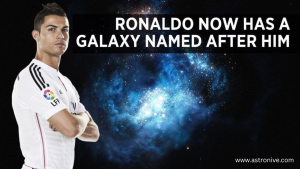
The scientists who discovered the galaxy also confirmed that they were inspired by Cristiano Ronaldo. Since Ronaldo is widely known as CR7, the name felt like a perfect mix of science and fun. His impressive performance in football — often described as “out of this world” — made the name even more fitting.
Because of this connection, the CR7 Galaxy quickly became popular outside the scientific world. Football fans loved the idea, and the media widely covered the story.
Cristiano Ronaldo’s “Star Power” in the Sky
Cristiano Ronaldo has been called a star many times because of his performance, but now there is literally a galaxy that shares his name. In fact, the CR7 Galaxy’s brightness and power make the comparison even more meaningful. Ronaldo himself earned the Ballon d’Or in 2013 and 2014 and continued to shine with incredible achievements, just like the galaxy that carries his initials.
How Scientists Discovered the CR7 Galaxy
The discovery of CR7 required some of the most powerful telescopes in the world. Scientists used:
- ESO’s Very Large Telescope (VLT) in Chile
- Subaru Telescope in Hawaii
- Keck Observatory also in Hawaii
These telescopes allowed astronomers to see extremely faint and distant objects. After combining data from all three telescopes, the team noticed an unusually bright galaxy. They analyzed it deeply and found signs that it could contain first-generation stars.
Dr. David Sobral, leader of the discovery team, explained that CR7 produced so much ultraviolet light that it must have played a major role in ionising the surrounding gas. This led to a clearer view of the early universe.
Later, the same team also discovered another galaxy named VR7, in honor of Vera Rubin, an astronomer known for her groundbreaking work on galaxy rotation.
Case Study — Comparing CR7 with MASOSA and Himiko
To better understand the importance of CR7, scientists compared it with two other major discoveries: MASOSA and Himiko.
Case Study: Early Bright Galaxies
CR7
- Extremely bright
- Contains Population II and possible Population III stars
- Large ionised bubble
- Linked to reionisation
- Named after Cosmic Redshift + Cristiano Ronaldo
MASOSA
- Features strong ultraviolet light
- Similar redshift to CR7
- Shows early galaxy characteristics
- Less bright than CR7
Himiko
- Discovered by Japanese astronomers
- Once considered the brightest early galaxy
- Surrounded by huge gas clouds
- Shares properties with CR7
Case Study Conclusion
The study showed that all three galaxies share:
- Strong ultraviolet emission
- Evidence of early star formation
- Ionised regions caused by powerful stars
However, CR7 still stands out because of its brightness and clear signs of ancient star activity.
What Scientists Learned from CR7
CR7 helped scientists understand the early universe in three major ways:
1. It Proved Early Bright Galaxies Were More Common
Before discovering CR7, astronomers believed that bright galaxies were rare. Now they believe there may be hundreds of thousands of them.
2. It Helped Explain How the Universe Became Clear
Because CR7 created a bubble of ionised gas, it showed how galaxies helped lift the cosmic fog.
3. It Confirmed Theories About First Stars
For decades, scientists believed Population III stars existed, but they had no strong evidence. CR7 gave the clearest signals ever detected.
Questions and Answers (FAQ)
Q1: Why is the CR7 Galaxy so famous?
Because it is one of the brightest galaxies ever discovered from the early universe. It also has a unique connection to Cristiano Ronaldo.
Q2: Does CR7 actually contain the first stars?
There is strong evidence that it might. Some parts of the galaxy show no heavy elements, which is exactly what first-generation stars should look like.
Q3: How old is the CR7 Galaxy?
It is more than 13 billion years old, formed around 800 million years after the Big Bang.
Q4: Why is the galaxy named CR7?
It stands for Cosmic Redshift 7, and also pays tribute to Cristiano Ronaldo’s CR7 nickname.
Q5: Will scientists discover more galaxies like this?
Yes. With newer telescopes like the James Webb Space Telescope, many more ancient galaxies are expected to be found.
Follow Link — Stay Connected
If you want more helpful content like this, follow me here:
👉 https://your-link-here.com
Conclusion — CR7 Is More Than a Galaxy
In the end, the CR7 Galaxy is not just a beautiful object in space. It is a bridge between the early universe and today. It helps explain how stars formed, how heavy elements were created, and how galaxies shaped the cosmos. At the same time, its name connects it to Cristiano Ronaldo, showing how science and popular culture can meet in unexpected ways.
CR7 shines brightly both in the universe and in our imagination. And as new discoveries continue, this galaxy will remain a symbol of curiosity, inspiration, and the endless wonders of space.

jafir
Jafir Abbas is the visionary founder and owner of Astronive.com, a leading online hub for astronomy enthusiasts, space exploration insights, and cosmic discoveries. With a passion for the mysteries of the universe, Jafir has dedicated his work to making complex astronomical concepts accessible and engaging for readers of all ages. Under his guidance, Astronive.com has become a trusted resource for space news, celestial events, and educational content that inspires curiosity about the cosmos. Jafir combines a keen interest in science with a commitment to clear, engaging communication, bringing the wonders of the universe closer to everyone.
View all posts